Cross-check
No single instrument is the whole situation. Read independent indications in relation and look for agreement, divergence and failure.
Origins / Flight
Learning to navigate by instruments helped form a discipline that later became central to Symbiain: do not confuse what feels persuasive with what the field of evidence supports.
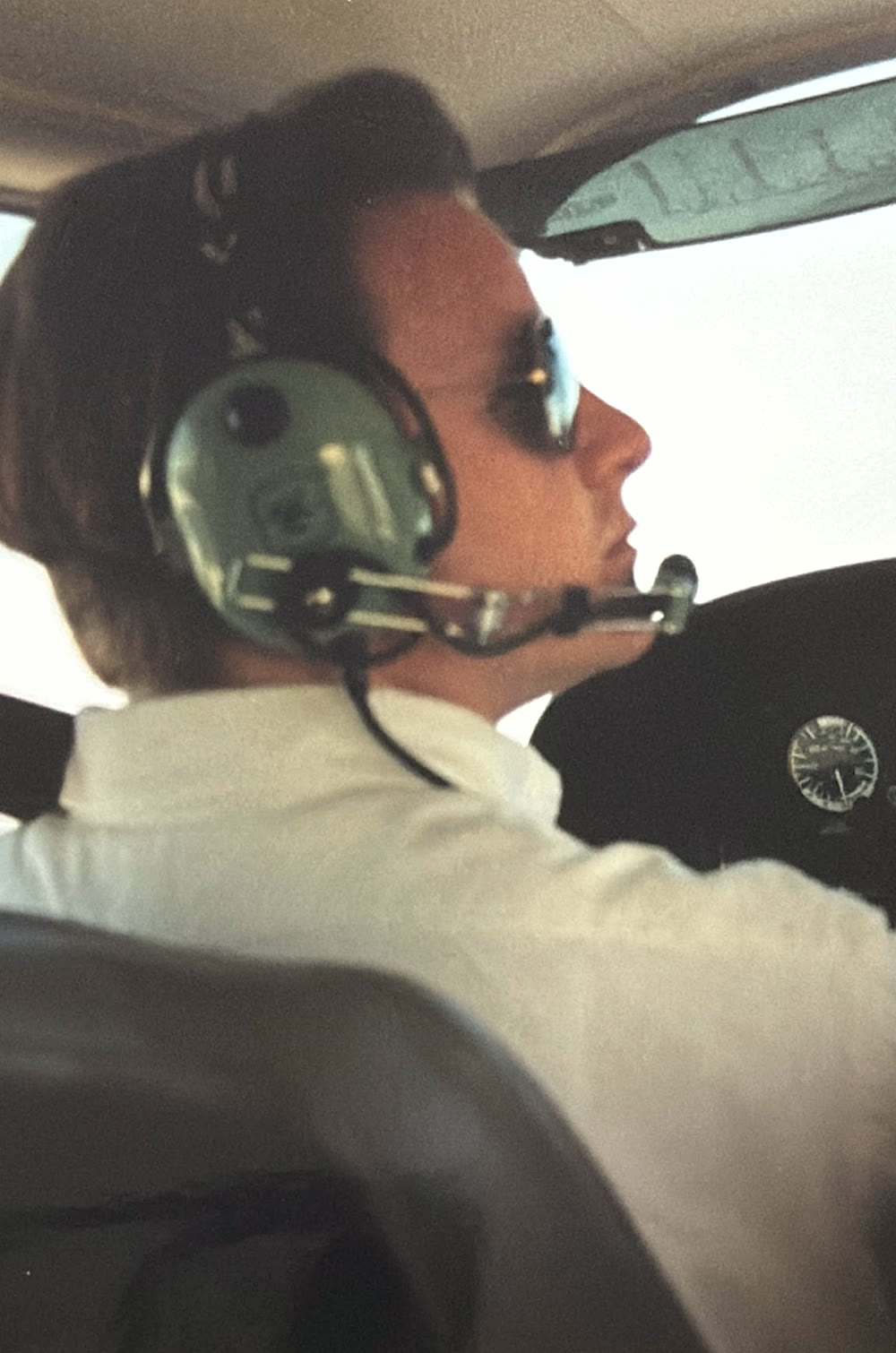
The formative lesson
Instrument flying teaches a demanding separation between sensation and indication. Without a visible horizon, the body may offer a compelling account of motion or attitude that does not match the aircraft’s instruments.
The answer is not to abandon judgement. It is to discipline it: scan, compare, interpret, act and then verify what changed.
Instrument plate / 01
An instrument becomes meaningful through its relation to the others, the phase of flight and the possibility of error. Agreement increases confidence; disagreement creates a question to investigate.
The decision to discontinue
When the required conditions are not established, the correct action is not to force the original plan. Discontinue, regain a safe reference frame, reduce ambiguity and prepare to decide again.
That logic matters far beyond aviation. Revision is not failure when the evidence no longer supports commitment; it is part of maintaining decision integrity.
From cockpit to method
No single instrument is the whole situation. Read independent indications in relation and look for agreement, divergence and failure.
When the natural horizon disappears, position must be reconstructed from reliable signals rather than felt certainty.
Small deviations become consequential when left unattended. Detect drift early, correct deliberately and check the result.
Attention is finite. Good practice orders observation so that one urgent signal does not erase the wider field.
Correction sequence / 03
The sequence is cyclical. Verification is not the end of judgement; it becomes the next observation.
What this establishes
Flight experience did not supply a ready-made theory of complex systems. It supplied a lived discipline: maintain a reference frame, cross-check evidence, recognise the limits of perception and remain prepared to revise.
Return to the author and the wider formation of the practice.
About Iain Davie →