The Greensill failure is a case in how a cash-flow product can become a concentrated credit, verification, liquidity, insurance, legal-rights and governance problem. The point is prospective control, not retrospective accusation.
Casebook / 12
Greensill.
Red flags in a supply-chain-finance failure.
When does an apparently routine supply-chain-finance structure cease to be low-risk working capital and need to be re-underwritten as concentrated credit?
This page demonstrates a way of structuring inquiry. It does not constitute professional advice, verified intelligence, a recommendation or a conclusion about any person, organisation or transaction.
Visual field plates
Make the field visible.
Keep the claim bounded.
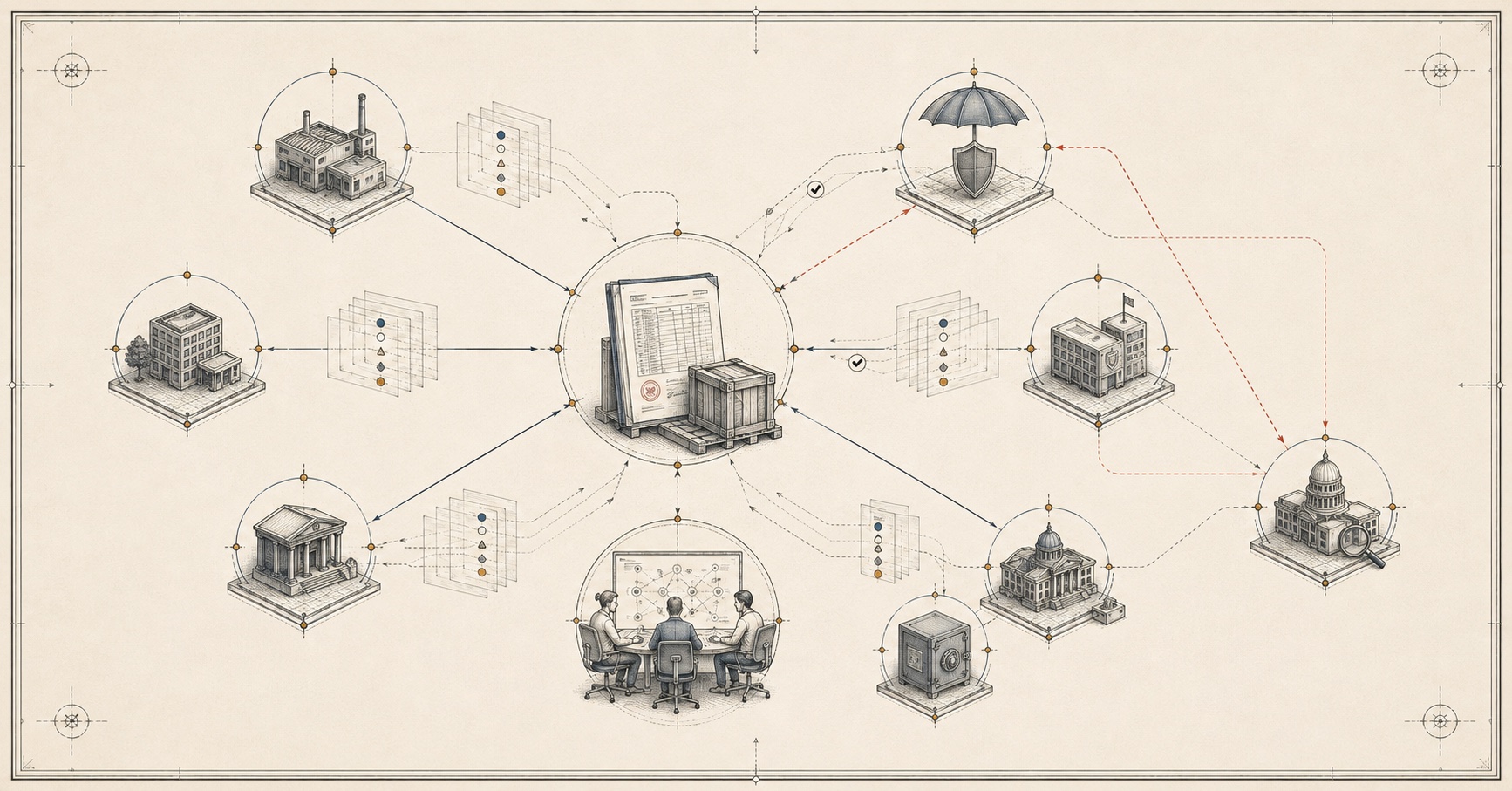
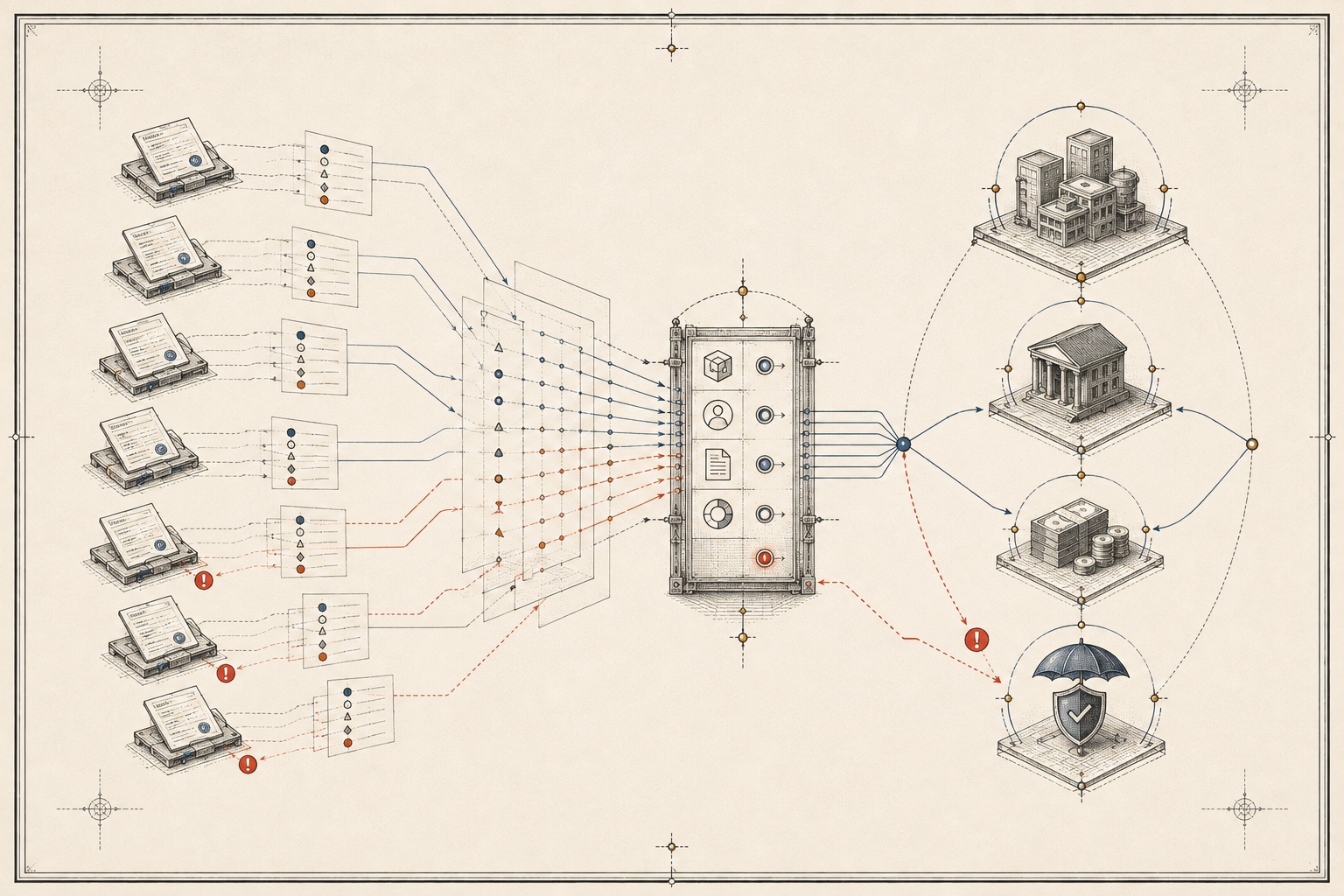
These original editorial plates are analytical aids, not source evidence or documentary reconstructions. They show what is being compared, where uncertainty sits and what observation would require the account to change.

The case in plain language
Start with the question,
not the answer.
The economic reality of a structure can be obscured when future receivables, concentration, insurance dependence, layered funding and weak independent challenge reinforce one another. A product label is not an assessment of asset quality or risk transfer.
The method, step by step
Four moves.
One visible chain.
Symbiain keeps the moves separate: establish what is observed, relate the conditions, test the possible reading, and state what would require revision.
- 01 / Observe
What can we responsibly say?
Parliamentary reports, German supervisory material and UK public records documented concerns including prospective receivables, material concentration, receivable-evidence failures, insurance dependence, governance and public-sector gatekeeping in connection with Greensill-related structures and entities.
- 02 / Relate
What may connect?
The meaningful analytical unit is the dependency network: originator, debtor, economic group, insurer, bank, fund, note issuer, investor, trustee and public authority. A loss of asset verification, credit insurance, legal protection or funding can travel across that network rather than remaining local to one invoice or entity.
- 03 / Test
What would distinguish the readings?
Can each receivable be independently evidenced; can exposure be aggregated by economic group; and can the structure remain solvent, liquid and legally enforceable if insurance, a major debtor, a funding channel or a contractual protection fails?
- 04 / Revise
What would change the account?
Revise the risk reading when debtor confirmations, delivery evidence, ageing, concentration data, insurance terms, legal rights, funding maps or independent review show that the stated exposure is better—or materially worse—than first understood.
Why use Symbiain here?
From method
to practical value.
The insight is what becomes visible. The feature is what the method does. The benefit is what the user gains. The value is what can improve in the topic at hand.
- 01
Insight
A routine product label can conceal debt-like economic exposure and correlated dependency risk.
- 02
Feature
Reconstructs the chain from underlying obligation through verification, concentration, insurance, funding, legal rights, governance and recovery.
- 03
Benefit
Turns diffuse warning signs into a visible set of tests that a lender, investor, auditor, insurer, trustee or public body can challenge.
- 04
Value
Supports earlier escalation, proportionate controls and a clearer decision to pause, redesign or decline a structure before a dependency failure becomes irreversible.
What to examine
Five conditions
to hold together.
- 01Present, enforceable and independently confirmed underlying obligations
- 02Future, prospective, contingent or insufficiently evidenced receivables
- 03Economic-group, related-party, originator, insurer and funding concentration
- 04Insurance renewal, cancellation, aggregate limits, claim conditions and loss-of-cover stress
- 05Security releases, payment redirections, consent controls, liquidity links and independent challenge
Tensions to hold
Working-capital label ↔ economic credit exposure
Diversified legal entities ↔ concentrated economic dependency
Risk mitigation ↔ single point of failure
Important boundary
Public-source analytical case only. It does not determine criminal, civil, regulatory or personal liability; repeat unverified allegations; or make an investment, lending, audit, legal, regulatory, insurance, suitability or transaction recommendation. Findings are limited to the cited public sources and should not be extrapolated to any person or entity beyond those records.
Sources & method
Sources support the stated observations only. All analytical readings remain provisional and should be tested against a defined purpose, scope and evidence base.