Source and evidence register
What information exists, where it came from, what it establishes and what it does not.
A traceable basis for discussion, challenge and later revision.A fixed-scope Symbiain offer / Iain Davie
Bring one difficult question. Leave with a written account of the evidence, the alternatives and the checks that matter next.
A fixed-scope review for decisions where information is scattered, explanations conflict and the cost of being wrong matters.
For selected early collaborators, Symbiain is also available as a limited founding pilot: a defined, evidence-led test of the method on one real question.
Discuss a review →See a worked example ↓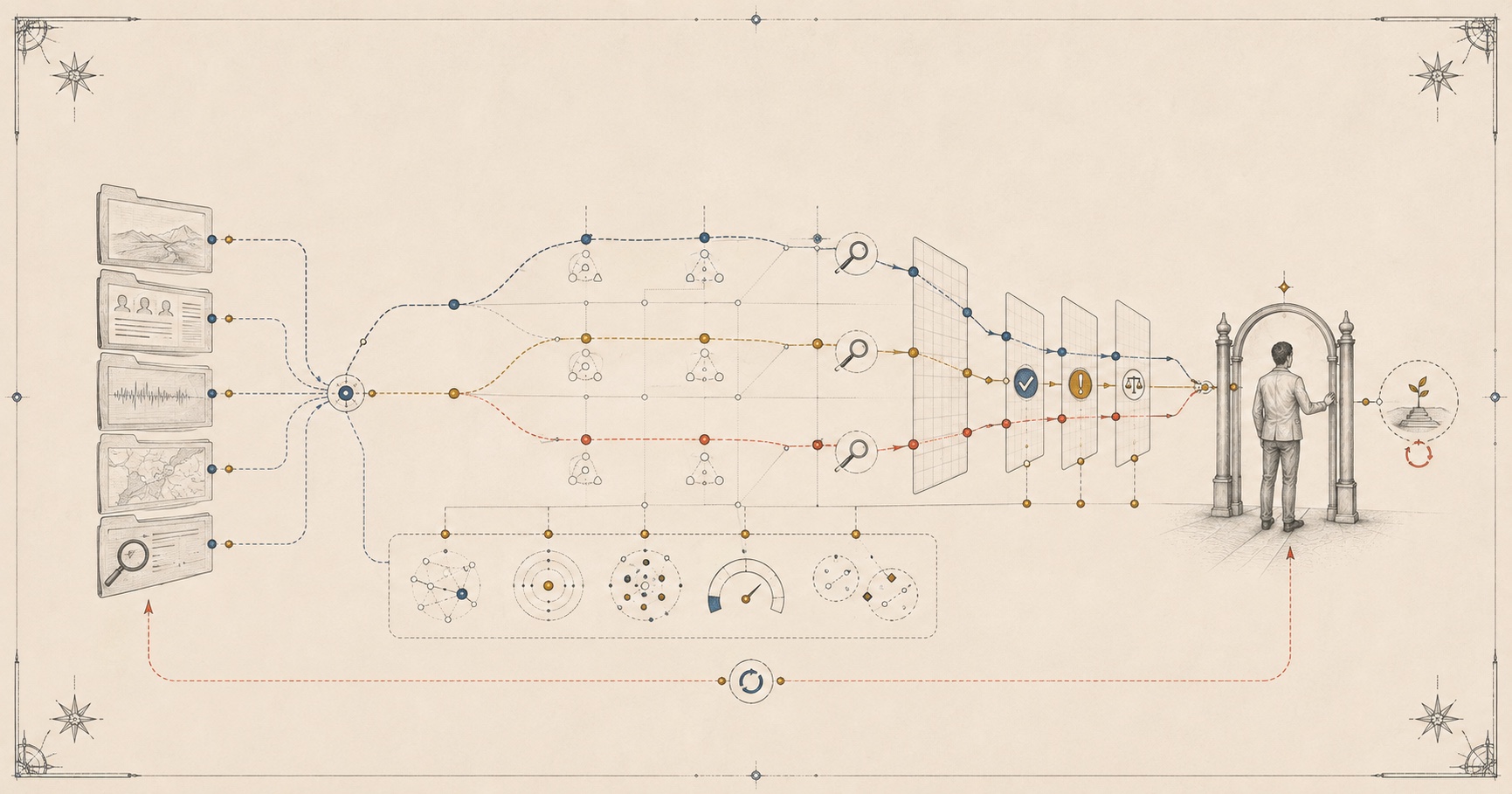
A decision is treated as a connected field, not a single answer. The plate is an orientation aid—not evidence and not a prediction.
How the relationship works
The work is collaborative. You agree the question, the information used and the outcome that would make the review useful. You and the relevant professionals retain every decision.
One agreed question, source boundary and useful outcome.
Only information supplied or expressly agreed for the review.
Assumptions, alternatives, gaps and corrections stay inspectable.
The client and relevant professionals retain judgement and action.
The offer
The review does not predict outcomes, profile people or replace specialist, legal, financial, technical or management judgement. It makes the decision environment clearer: what is known, what is inferred, what else may explain the situation, where the risks sit and what should be verified next.
The written deliverable
A practical working record designed to make the decision easier to examine, challenge and improve before commitment.
What information exists, where it came from, what it establishes and what it does not.
A traceable basis for discussion, challenge and later revision.A concise visual account of the situation: actors, constraints, dependencies, pressures, hand-offs and moving parts.
A shared frame for seeing how the decision environment is connected.The principal interpretations, the assumptions beneath them and the evidence that could distinguish between them.
A disciplined challenge to a premature single reading.What could materially affect the decision, what remains uncertain and where confidence may be misplaced.
A calibrated record of decision exposure rather than a false assurance.The practical next checks, questions, records and expert inputs most likely to improve the decision before commitment.
A clear route from uncertainty to the next defensible action.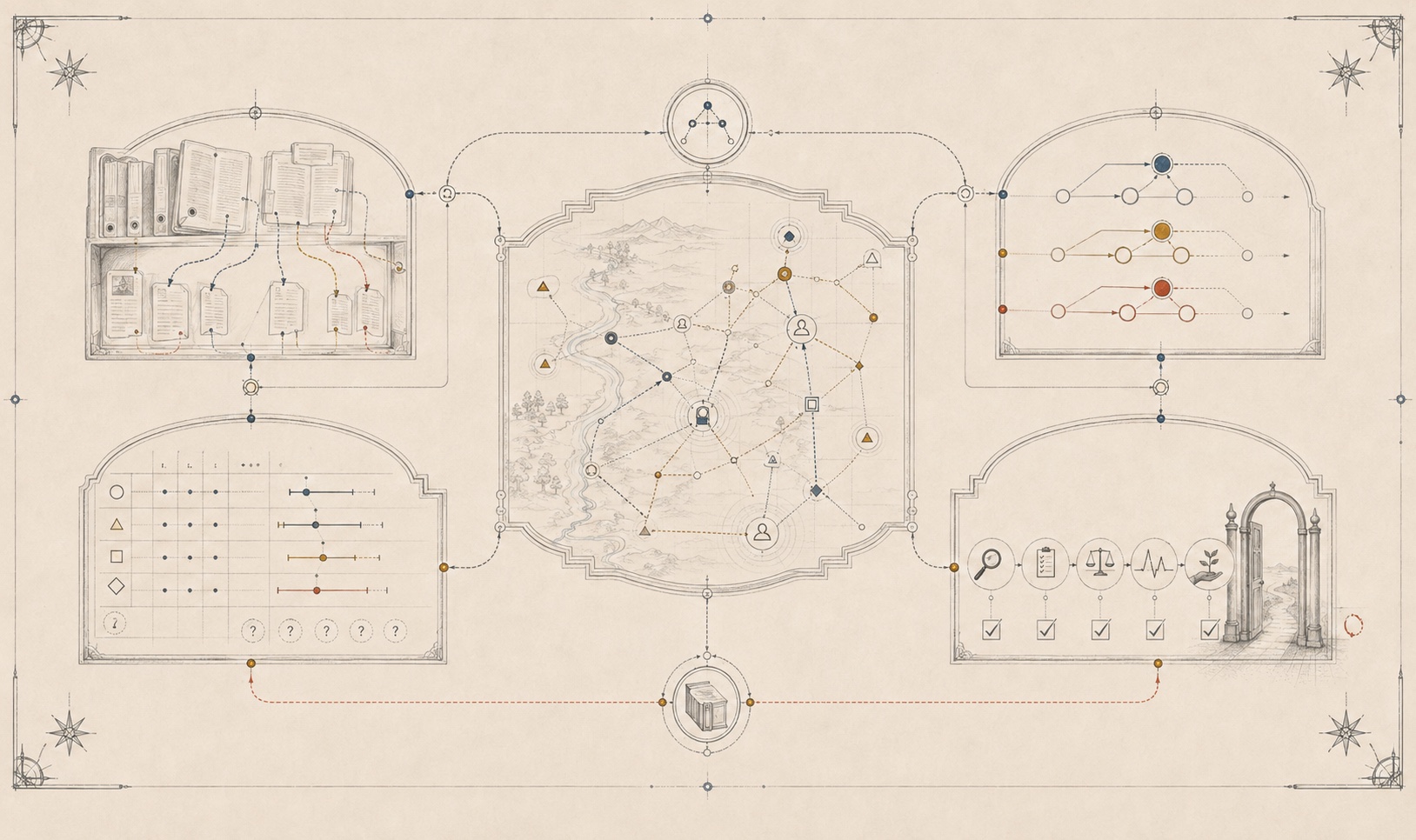
Five distinct records preserve the route from source to decision. Keeping them connected prevents a polished conclusion from hiding weak evidence or unresolved uncertainty.
Worked demonstration / fictional records
Three records, five claims and one corrected answer. Open the interactive example to trace a claim, add fictional evidence and inspect what changes. This is a teaching case, not a measured model test.
The order requires delivery on 12 June. The supplier reports readiness on 11 June. The carrier records collection on 13 June and receipt on 17 June.
A supplier problem, a collection-booking delay or a transit problem need different evidence. The arrival date alone cannot choose between them.
The operations lead requests the booking trail and written confirmation of the next delivery before deciding how to respond.
The useful change: a broad allegation becomes a dated evidence record, competing explanations and specific checks owned by a named person.
Try the five-claim audit →Before you commit
A bounded process
Scope, timing, available sources, confidentiality expectations and a fixed written deliverable are agreed before work begins. No confidential material should be sent by ordinary email before the appropriate route is agreed.
Agree the actual decision or inquiry the review needs to support.
Set the period, geography, actors, source base, exclusions and confidentiality expectations.
Separate source, report, observation, inference, hypothesis and allegation.
Show dependencies, incentives, pressures, constraints, feedback and decision points.
Retain alternatives and specify the evidence that could discriminate between them.
Deliver a concise review with unknowns, risks and next verification actions visible.
Best suited to
The review is especially useful when a decision needs to be made under time pressure, a single narrative has become too comfortable, or the people responsible need a shared account of what should be checked before proceeding.
What the review changes
The value is not another layer of certainty. It is a clearer record of what supports the decision, what could still overturn it and who must verify the next material point.
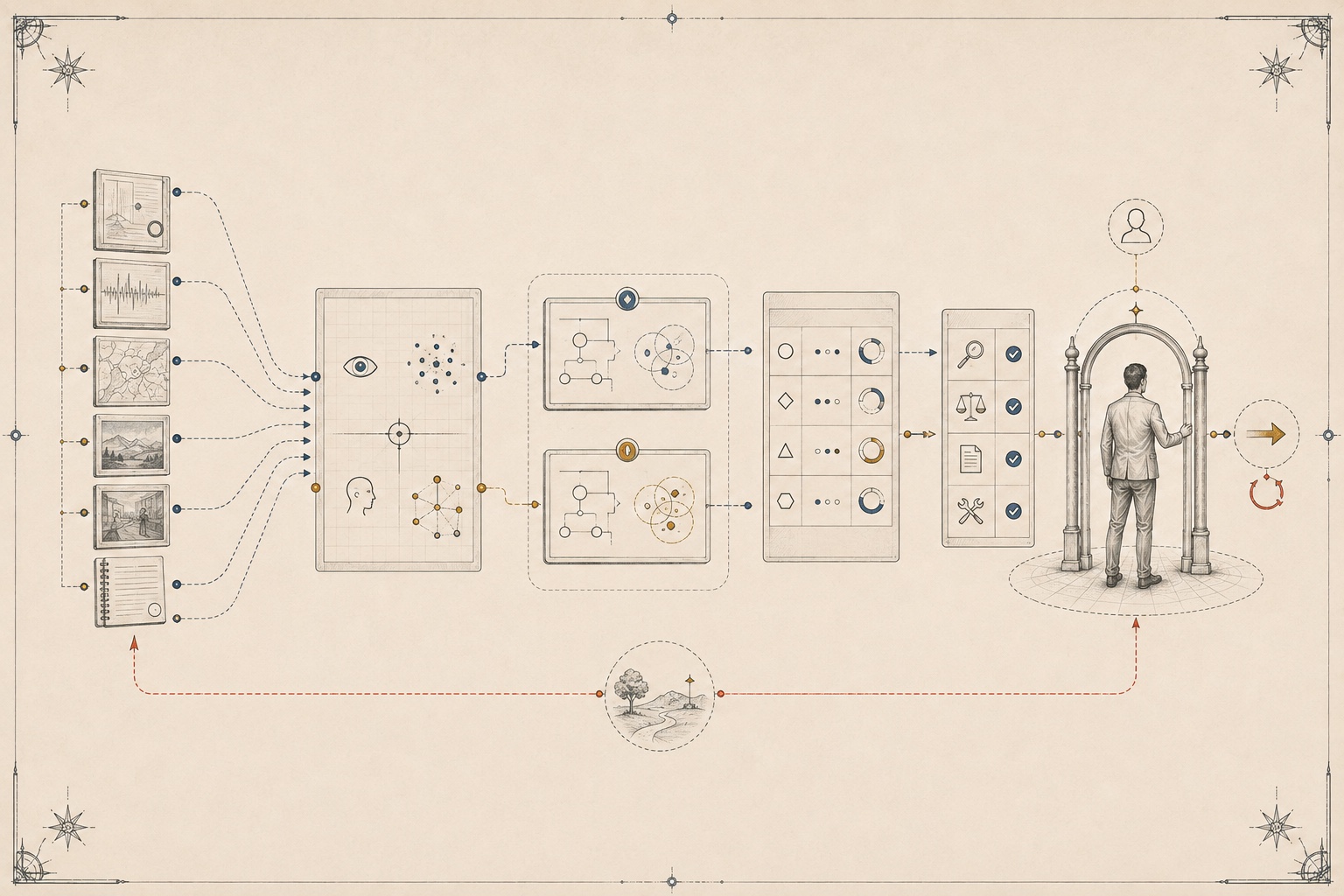
The final output is a route to better verification: source, claim, alternative, exposure, owner and next check remain visible.
Professional boundary
Symbiain does not provide regulated advice, technical certification, medical guidance, legal opinion, sanctions screening, forensic investigation, investment research or counterparty due diligence.
It does not convert a pattern into proof, an association into a cause, a public report into verified intelligence or a working hypothesis into a prediction.
Where specialist judgement is required, the review should help define the question for an appropriately qualified professional—not replace that professional.
Founding pilot enquiries
Symbiain is opening a small number of fixed-scope founding pilots for organisations, research teams and operators facing a consequential question under uncertainty.
A pilot applies the Decision Integrity Review to one defined situation: separating source from interpretation, mapping relationships and pressure, holding credible alternatives open, and identifying what should be verified before action.
The purpose is not to replace professional, operational, clinical, legal, financial, safety or management authority. It is to make the route from evidence to decision more inspectable—and to learn, with the participating team, where the method is useful, incomplete or needs correction.
A defined decision or operational question
A source and evidence register
A field map of actors, dependencies, constraints and pressure points
Competing explanations and disconfirmation criteria
A decision-risk and escalation view
A short correction and learning record
Decision Integrity Review
Each review is agreed in advance, with clear source boundaries, confidentiality expectations and a defined written deliverable.