What can be visibly located in the image or supported by a source.
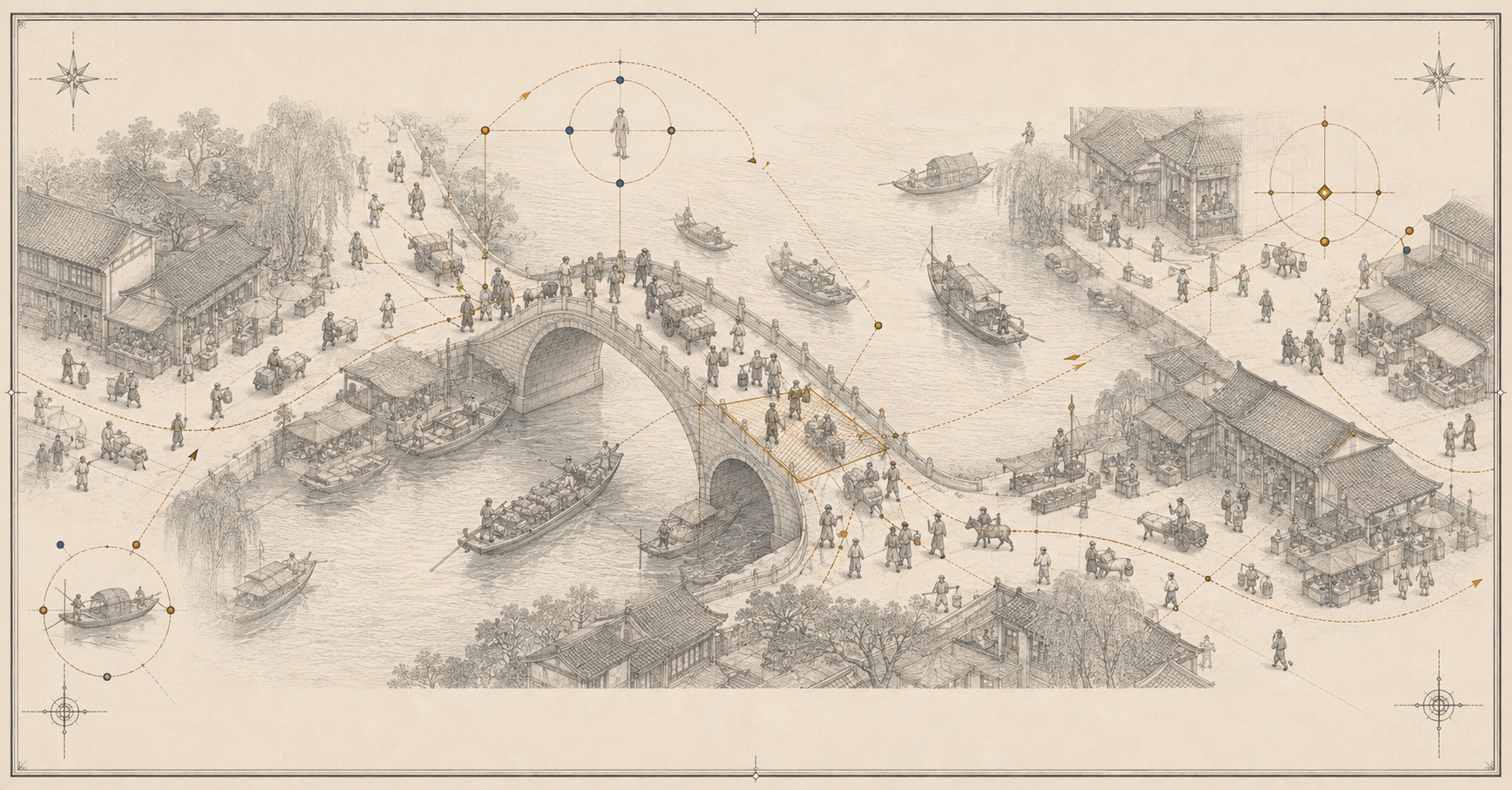
Symbiain Field Observation Training
Before the story,
there is a field.
Practise separating what you can see from what you think it means. Inspect a bridge scene, write five short entries and take away your own observation record.
Open the worksheet ↓Original Symbiain interpretive training plate.
Inspired by the observational richness of the Qingming handscroll tradition; not a reproduction.
Try the method / five short entries
Look closely.
Leave a useful record.
Use the bridge detail to practise. Write what you see, keep alternative explanations open, then copy or download your own account. Your entries stay in this page and are not submitted to Symbiain; save them before you leave.
0 of 5 entries written A prompt for reflection, not a score.
Record what you can locate or source, before explaining it.
What connects, enables, constrains or depends?
Where does movement, access or a commitment narrow?
Give two possible readings and say what separates them.
What evidence would change your account?
Keep the distinctions visible
A compelling image
is not an explanation.
A proposed account of a pattern, relation or pressure—not a fact by itself.
A proposition held lightly until stronger evidence or comparison can test it.
The observation, alternative or consequence that would change the account.
The exercise
Look first.
Then make the moves visible.
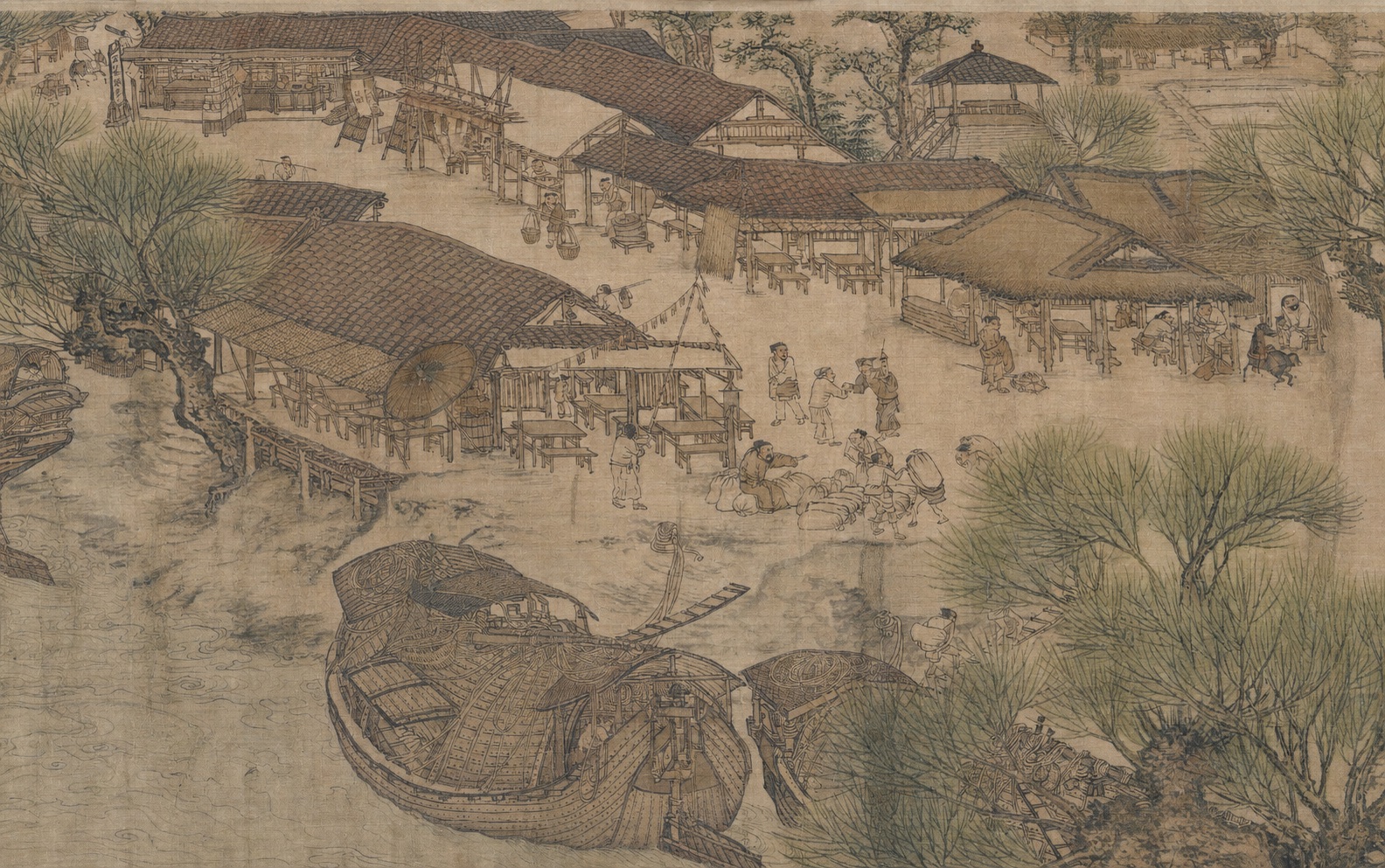
This is not an art-history quiz, a hidden-code exercise or a prediction tool. The Qingming scroll is used here because it gives us a rich field: water, work, trade, crowds, thresholds, danger and recovery. The question is not what it secretly means. The question is how a careful observer can form a better, more corrigible account of what matters.
Three scales of attention
From scene
to inspectable field.
These original editorial plates demonstrate three different capacities: orient to the whole, separate the observation registers, and trace how pressure changes connected movement. They are teaching diagrams, not source evidence or reconstructions of a named historical passage.
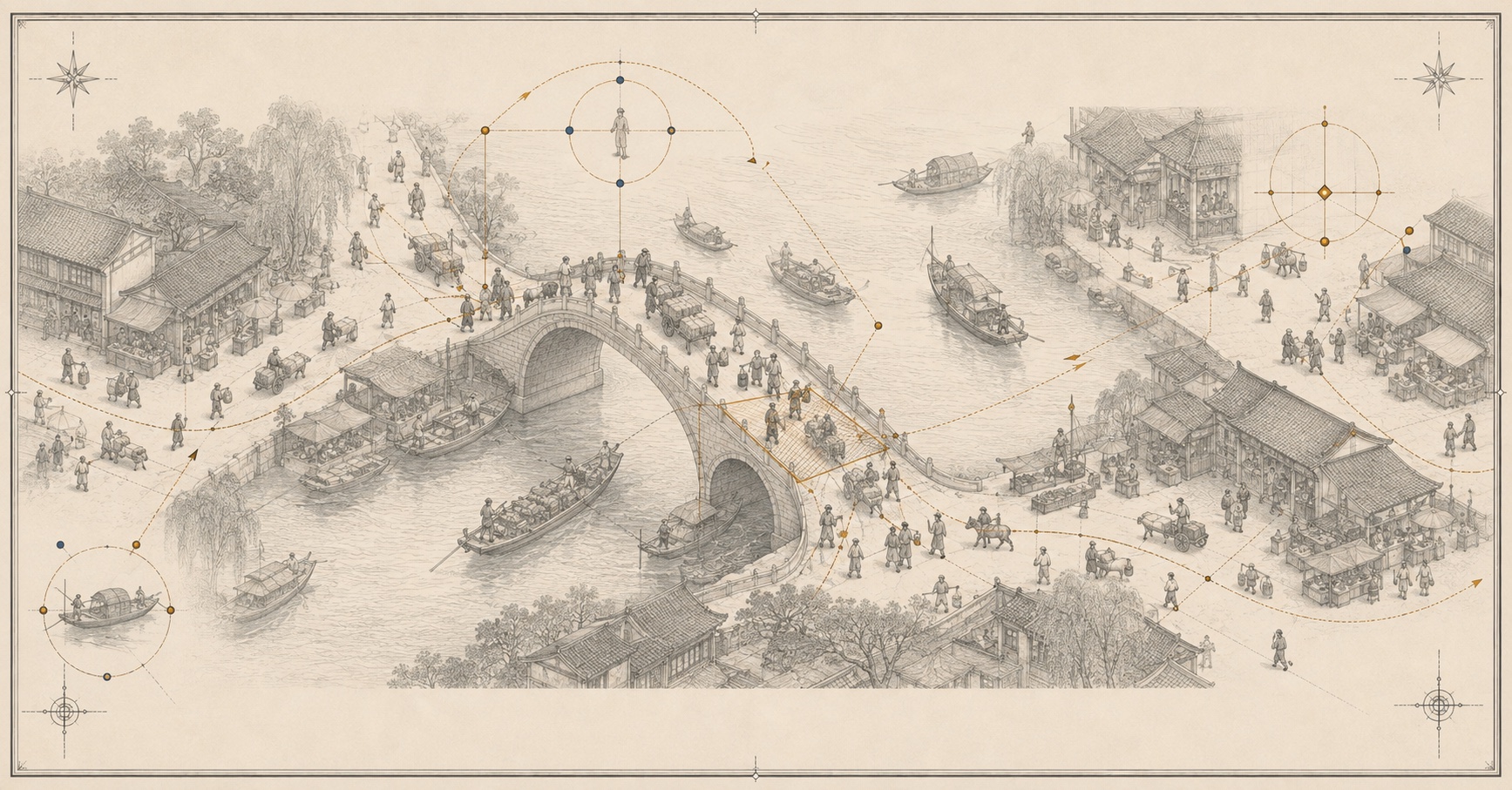
Begin with movement, routes, people, built form and constrained passage before choosing one dramatic detail.
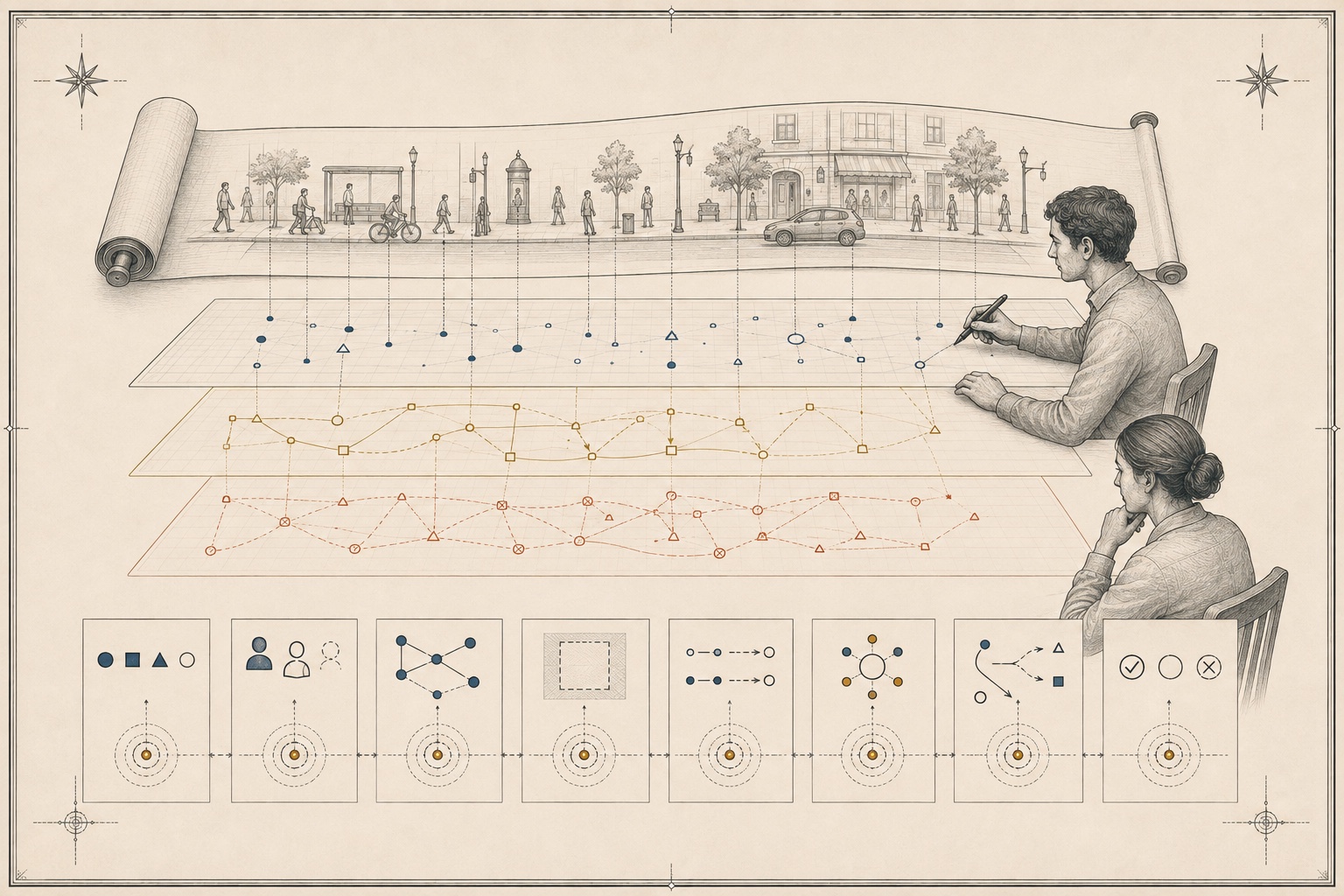
Entity, role, relation, boundary, time, stake and outcome are recorded before the explanatory layer is allowed to settle.
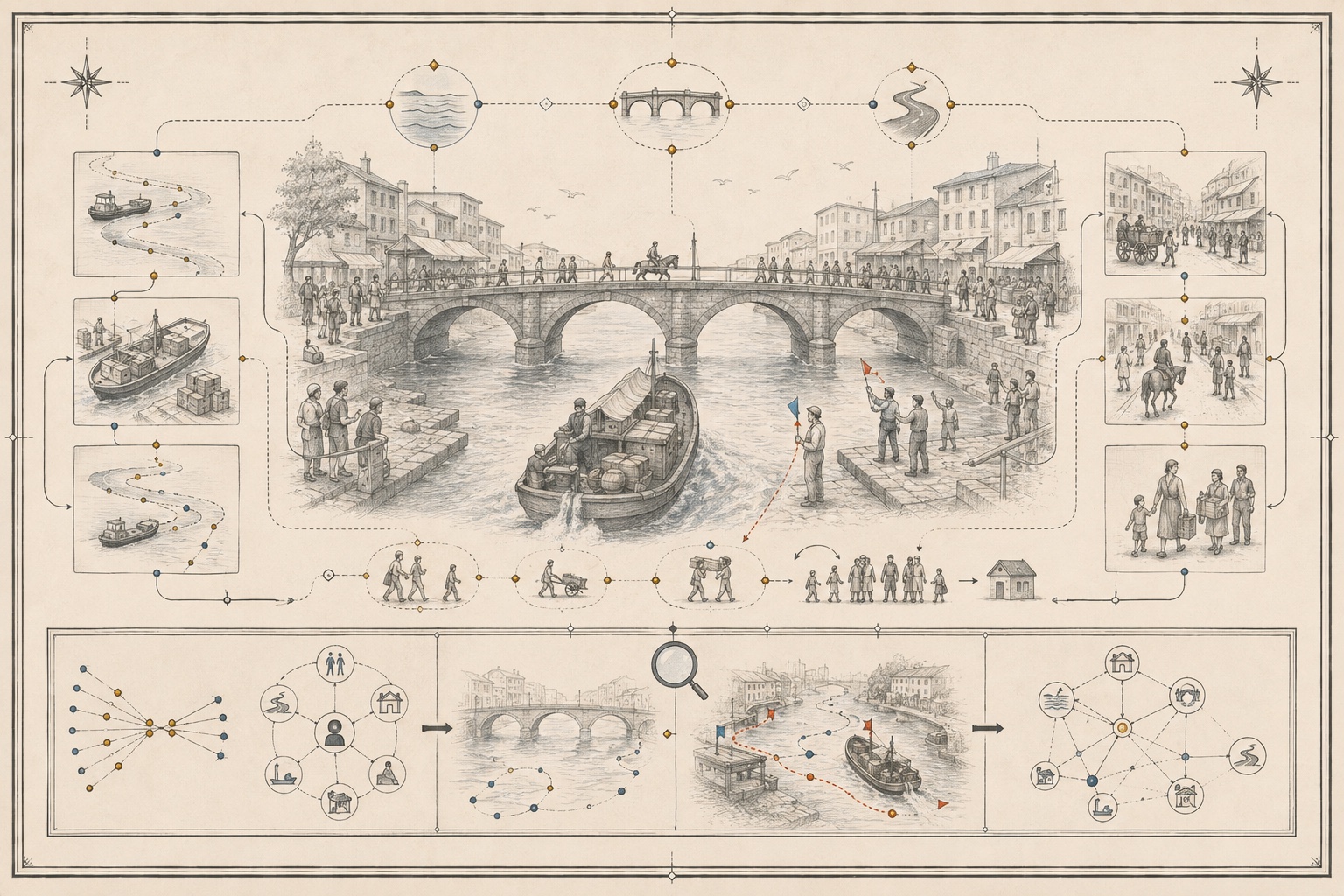
A bottleneck matters because it changes several connected routes—and because the first reading may change when the field is observed again.

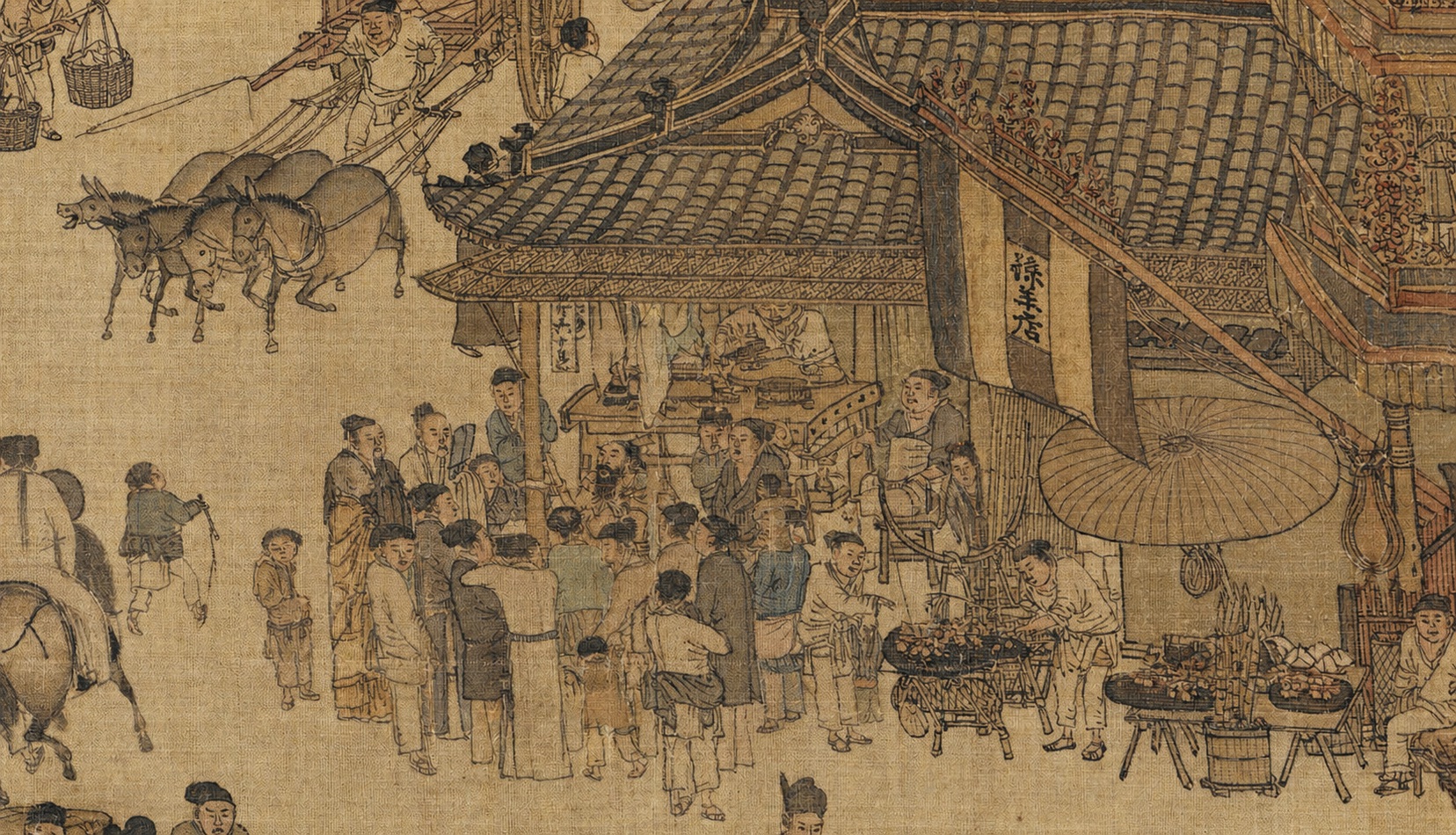
01 / FIELD MOVE
Locate the field
What is observed
Water, routes, structures, vessels, goods, people and a built edge are visible together.
Ask
What is present before you decide what it means?
Start wide. Name entities, routes and conditions without turning them into a story.
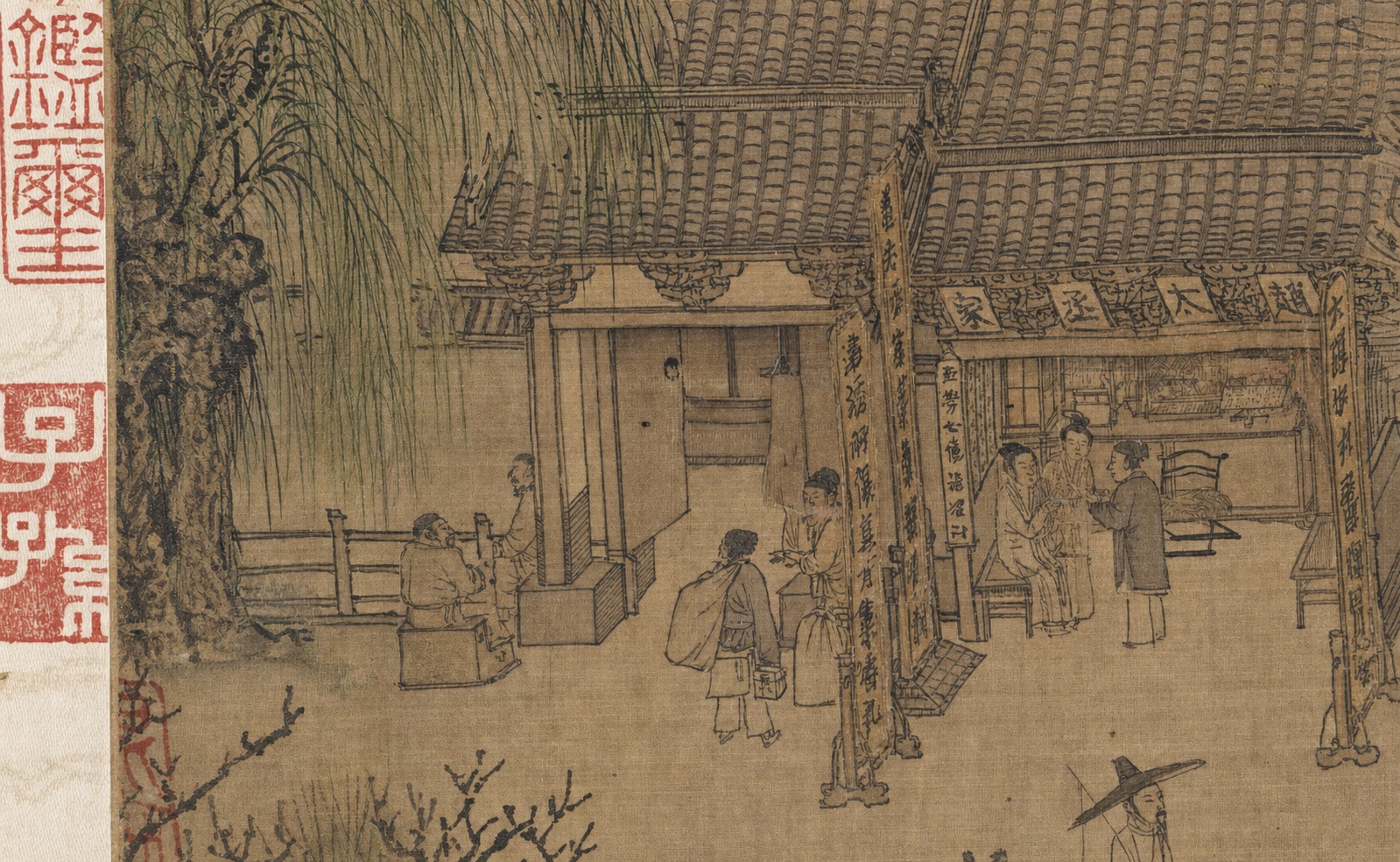
02 / FIELD MOVE
See the circulation
What is observed
Goods, labour, movement, exchange and attention accumulate in a dense commercial setting.
Ask
What is moving, exchanged, delayed or depended upon?
Look for flows—not just objects. A market is made by relations among roles, goods, rules and time.
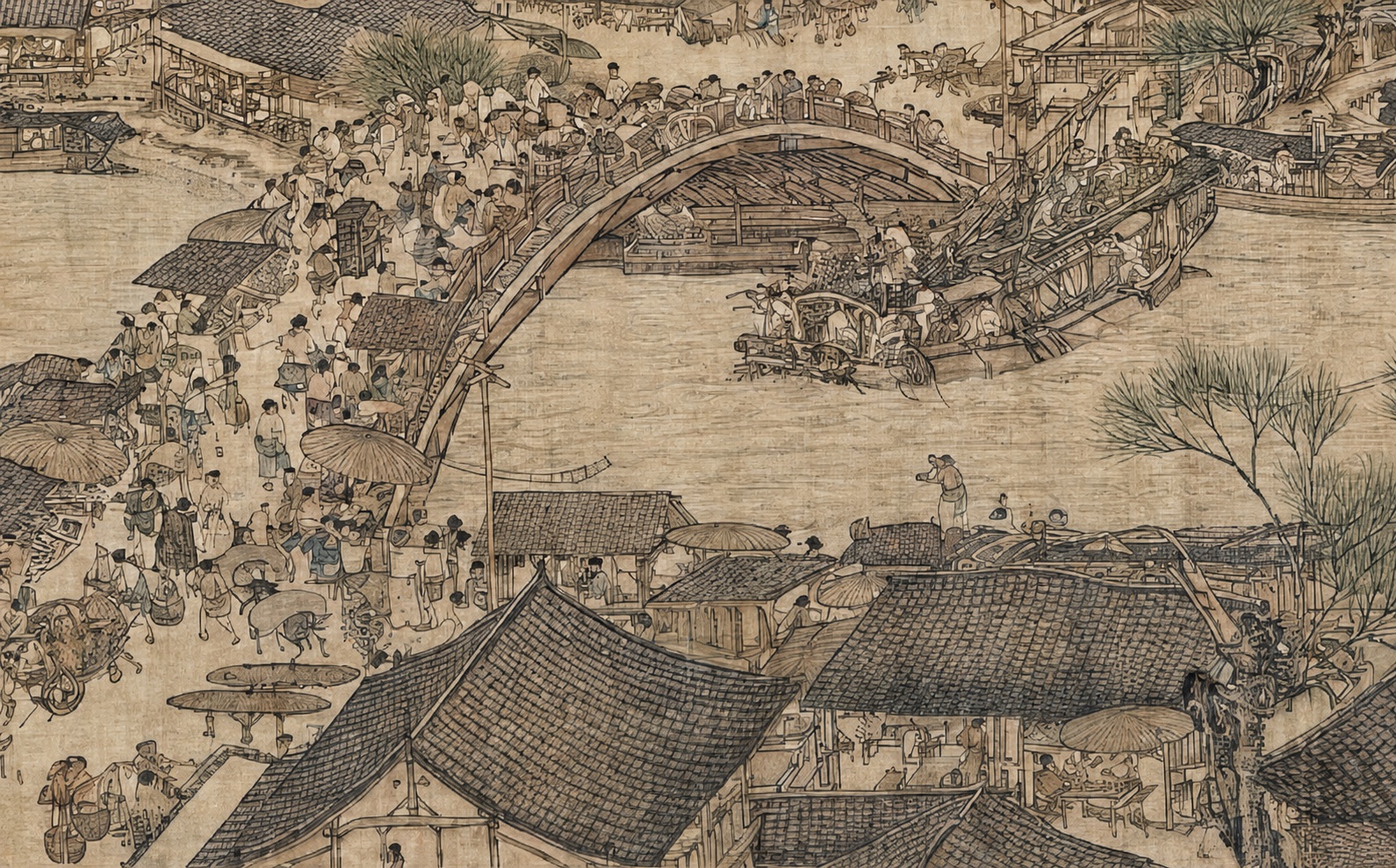
03 / FIELD MOVE
Notice the threshold
What is observed
An entrance, enclosure and clustered activity make a boundary visible.
Ask
Where does access change, and who is exposed to that change?
A gate, bridge, doorway, rule or queue can reveal the point where a system becomes constrained.
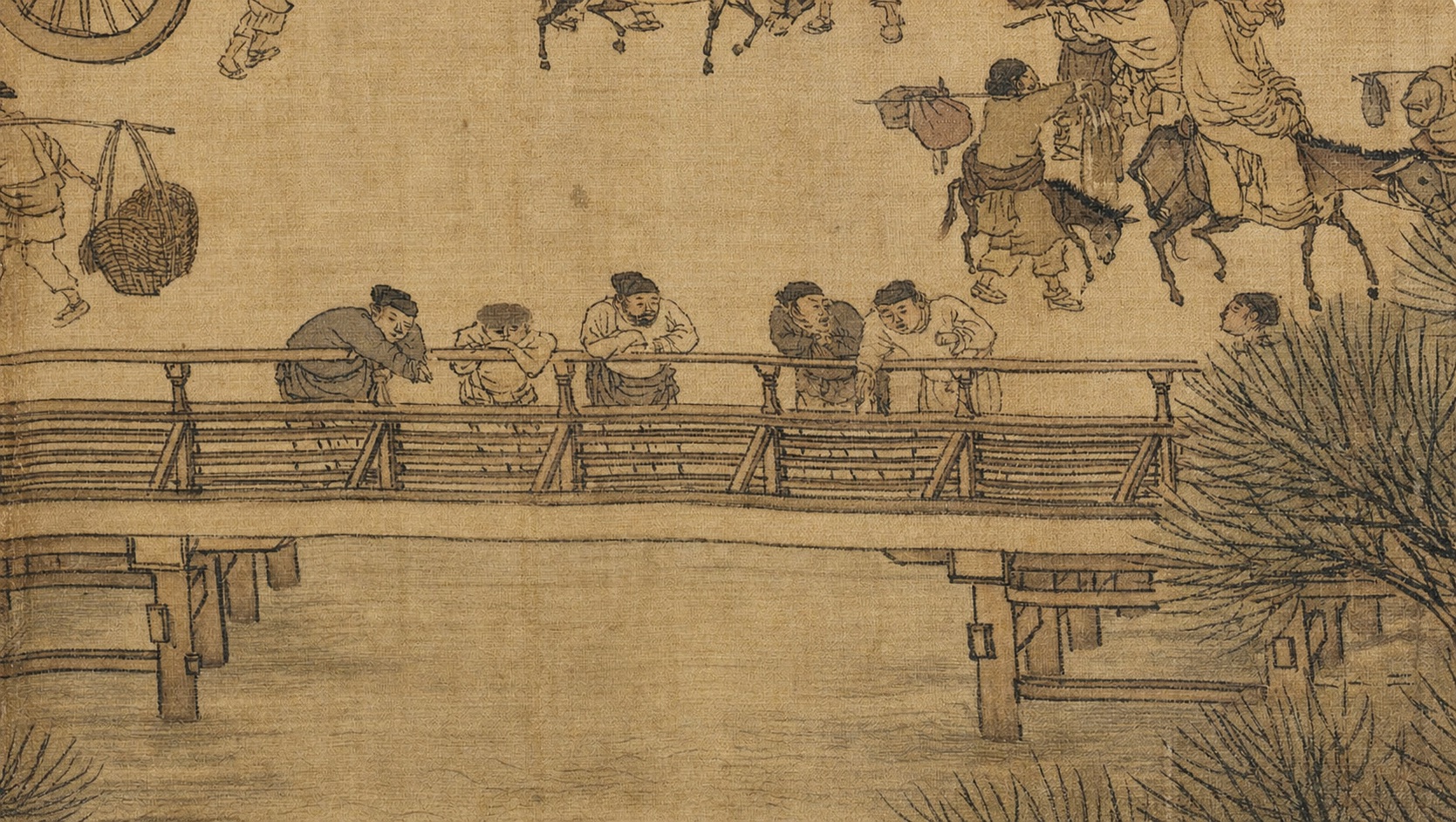
04 / FIELD MOVE
Find the pressure point
What is observed
A crowded bridge and a vessel beneath it concentrate movement into one narrow crossing.
Ask
What must coordinate for passage to continue safely?
Pressure becomes visible where several flows meet a constraint.
05 / FIELD MOVE
Hold alternatives open
What is observed
People are watching, moving, working or waiting; the detail alone does not settle their motives.
Ask
What are two credible accounts of this scene—and what would distinguish them?
An interpretation is useful only when it can be compared with an alternative and revised.
06 / FIELD MOVE
Track what changes
What is observed
The field continues beyond a local event: routes reopen, people move on and conditions are altered.
Ask
What has changed, what has held, and what should be checked next?
Do not stop at a vivid event. Trace consequence, recovery, drift and the next observation.
Has the closer reading changed your first account?
Return to your worksheet and revise it ↑Carry the method into your work
From an impression
to a testable question.
- 01What is present?
Name the actors, objects, signals, places and facts before explaining them.
- 02What connects?
Map flows, dependencies, rules, incentives, boundaries and exposure.
- 03Where is pressure building?
Locate bottlenecks, thresholds, delays, concentrations and irreversible choices.
- 04What would change the reading?
Hold credible alternatives and specify the observation that would revise the account.
Training boundary
Symbols can prompt a question.
They do not settle it.
This page does not claim that the scroll encodes a universal system, predicts events or proves a link to later texts or traditions. It is a public exercise in observation and disciplined interpretation. The method becomes useful only where its distinctions improve a real question and remain open to correction.
For a fixed-scope Decision Integrity Review, research collaboration or a structured field-mapping conversation.
Observation in motion
Return to the picture.
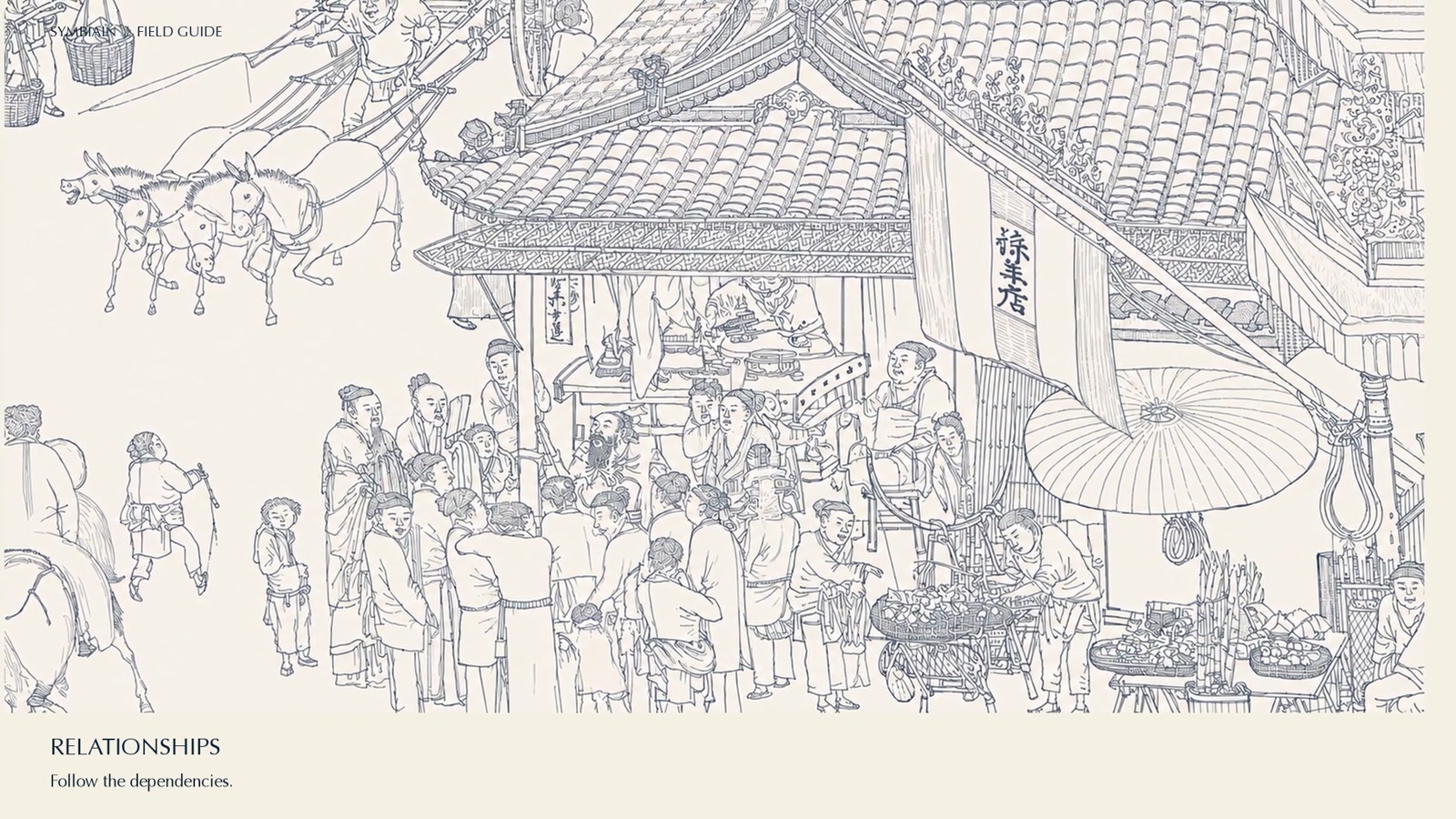
Two illustrated studies extend the exercise into moving image and sound. Source context and the limits of each interpretation accompany the films.
 2:00
2:00Field studies
The Field and the Judgement
A Qingming-inspired study
A river city, a crossing and a changing field of relationships. Seven illustrated studies introduce observation, interpretation and calibration.
Watch the film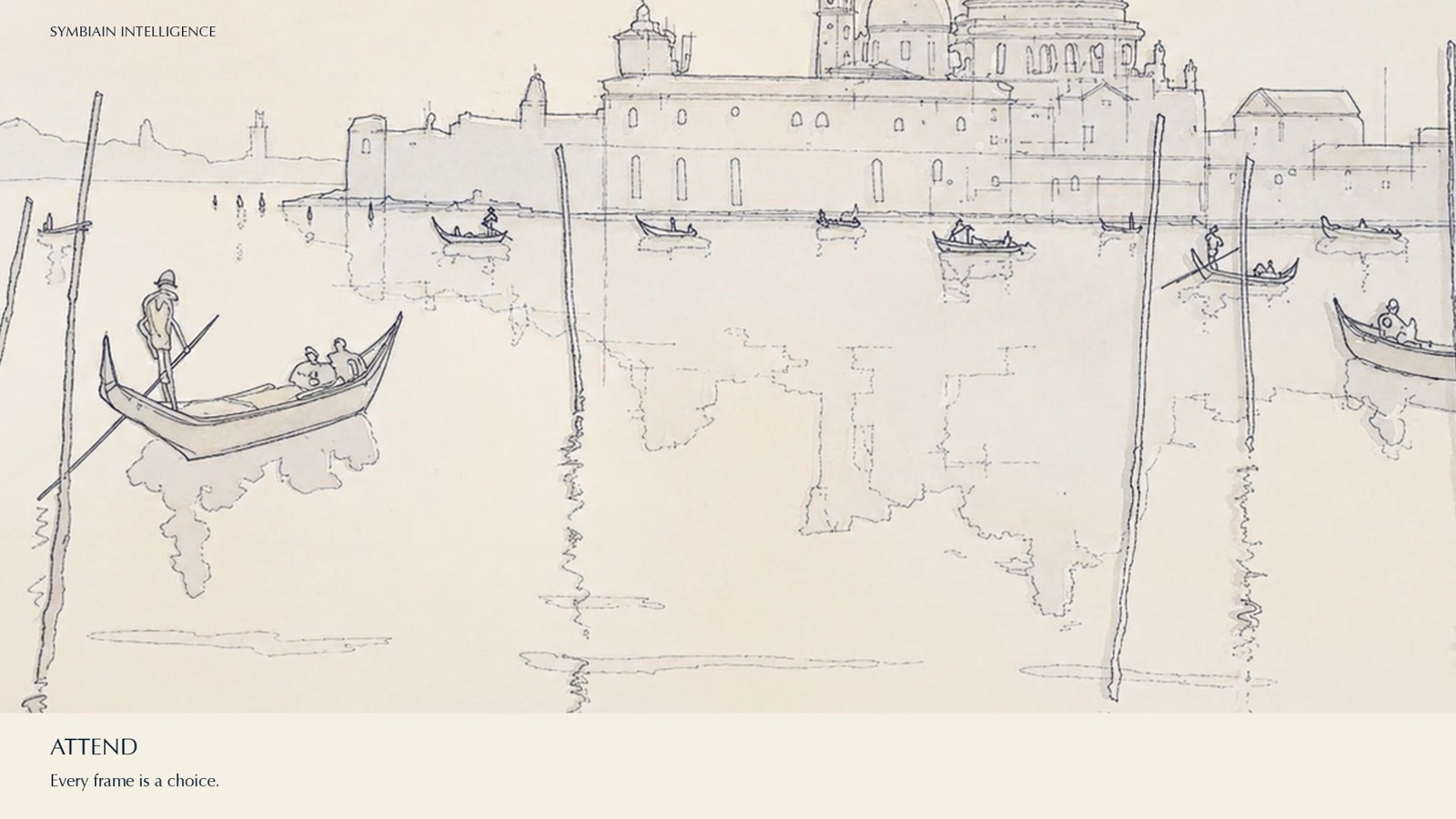 1:32
1:32Field studies
What the Water Holds
Venice, attention and change
A painting by John Davie becomes a moving study of water, architecture and attention—then returns to the original work.
Watch the film