This research prototype asks where a disciplined glyph system can complement alphabetic text by making relationships, thresholds, direction, intensity, time and exception easier to orient to—while every symbol remains linked to a legend, source and fuller explanation.
Casebook / 23
Glyphic reading.
A second lens for complex information.
When do glyphs make a complex field easier to read, and when does their compression remove too much meaning?
This page demonstrates a way of structuring inquiry. It does not constitute professional advice, verified intelligence, a recommendation or a conclusion about any person, organisation or transaction.
Visual field plates
Make the field visible.
Keep the claim bounded.
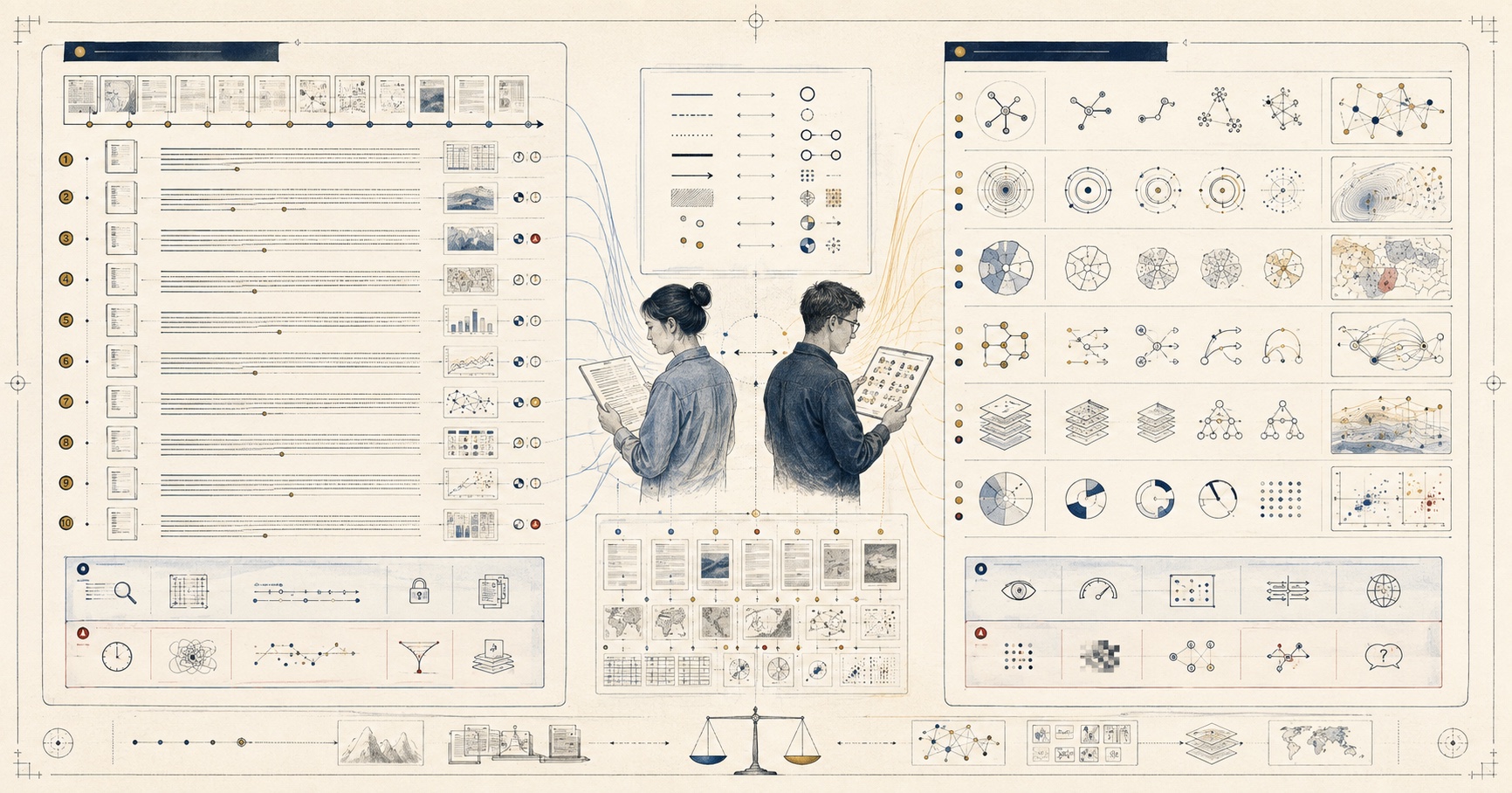
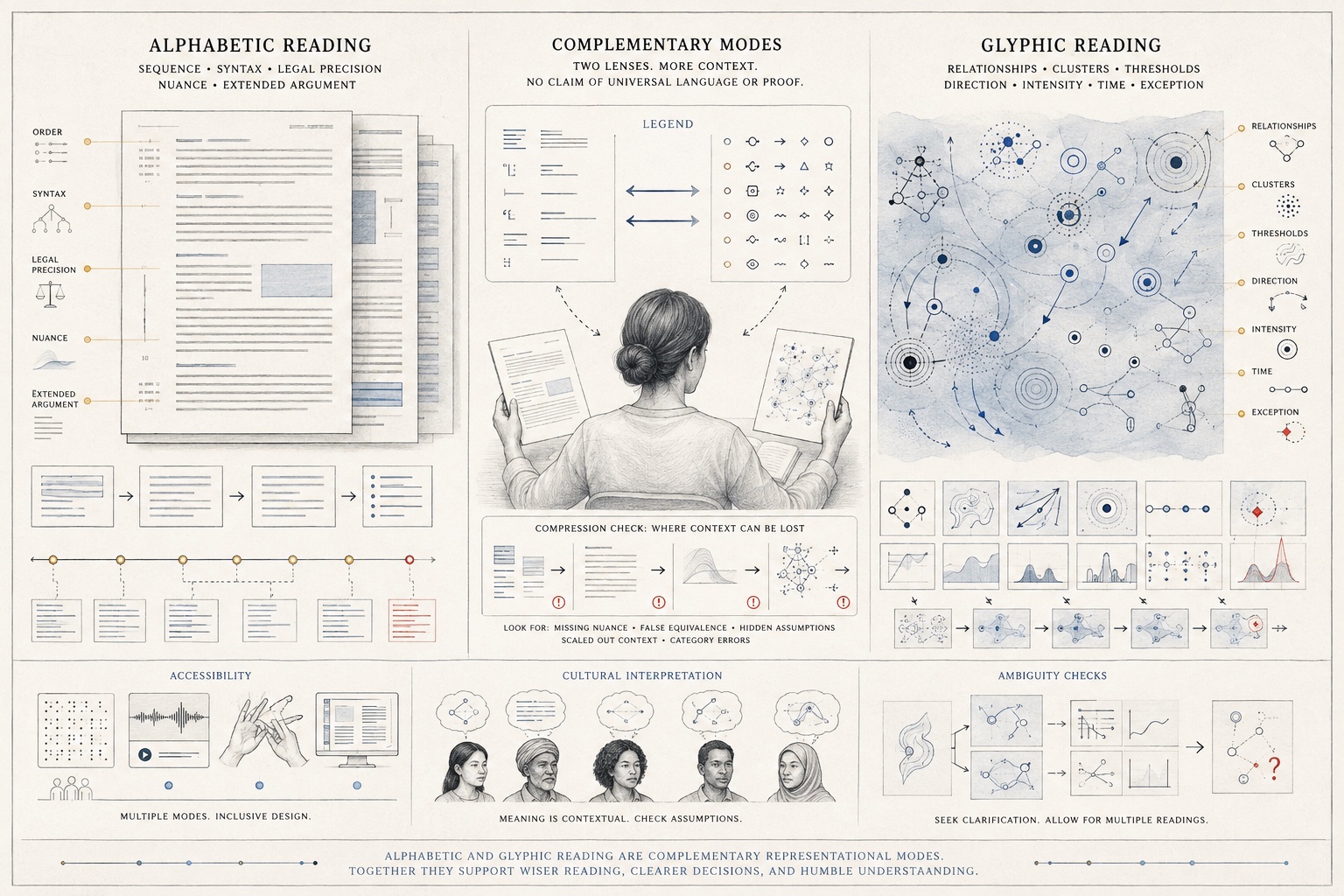
These original editorial plates are analytical aids, not source evidence or documentary reconstructions. They show what is being compared, where uncertainty sits and what observation would require the account to change.
The case in plain language
Start with the question,
not the answer.
Alphabetic language is powerful for sequence, exact qualification, law and extended argument. It can be slow at showing topology and simultaneous relationships. Glyphs can make a field graspable at a glance, but unfamiliar symbols can also create ambiguity, cultural mismatch and false confidence.
The method, step by step
Four moves.
One visible chain.
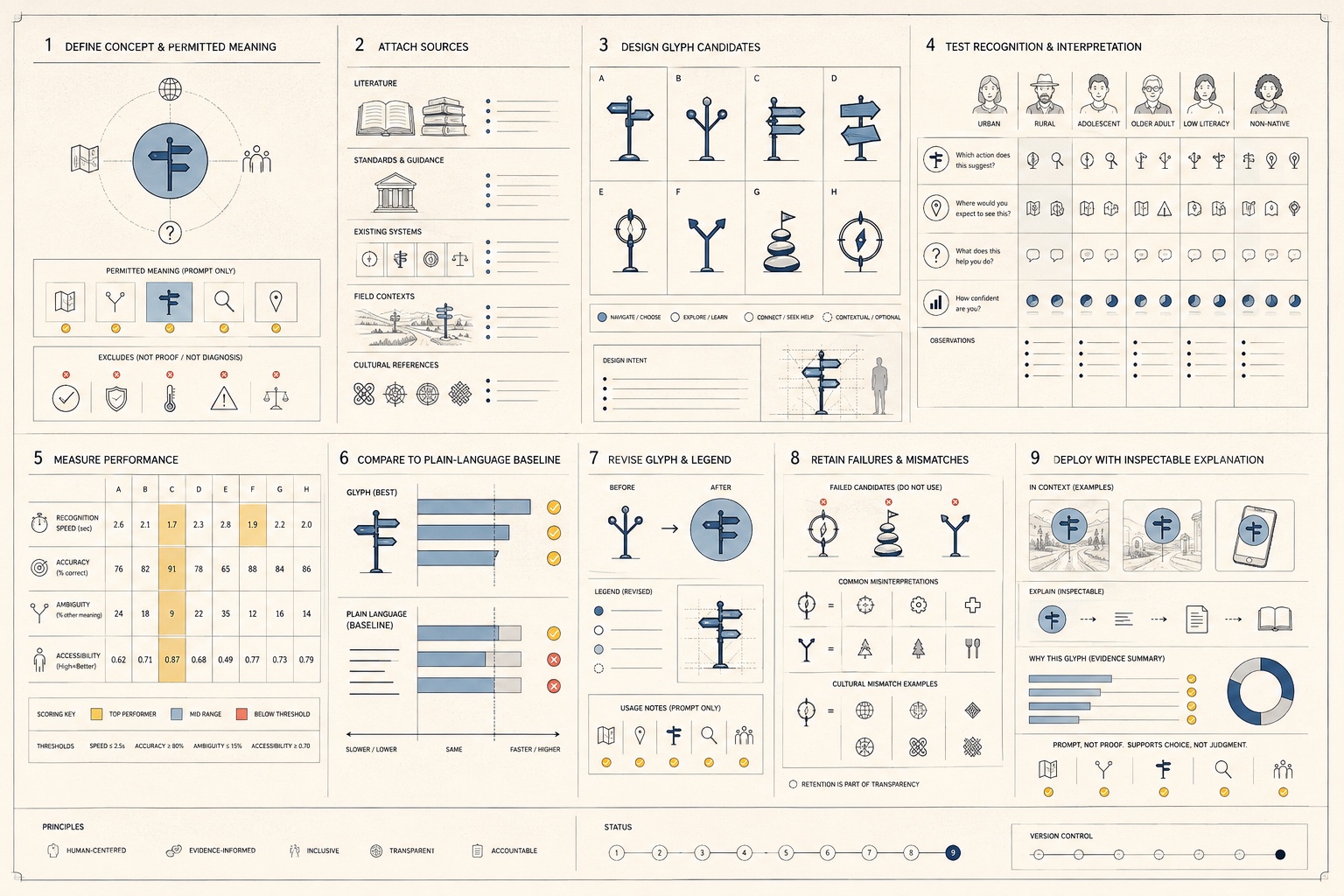
Symbiain keeps the moves separate: establish what is observed, relate the conditions, test the possible reading, and state what would require revision.
- 01 / Observe
What can we responsibly say?
Graphical symbols are not automatically universal. ISO 9186-1 specifies testing of graphical-symbol comprehensibility and recognises that supplementary text may be necessary when a symbol does not communicate its intended meaning reliably.
- 02 / Relate
What may connect?
A Symbiain glyph should be a compact, learnable orientation device rather than a secret code or proof. It should disclose its permitted meaning, evidence relationship, uncertainty and limits; open into accessible text; and be compared with a plain-language baseline across different readers and contexts.
- 03 / Test
What would distinguish the readings?
For a pre-specified task, do users recognise the intended relation more quickly and accurately with the glyph, retain the important qualifications, and know when to open the underlying explanation?
- 04 / Revise
What would change the account?
Redesign, relabel or retire a glyph when comprehension, ambiguity, accessibility, cultural interpretation or baseline comparison fails; retain rejected candidates and misreadings as part of the public design record.
Why use Symbiain here?
From method
to practical value.
The insight is what becomes visible. The feature is what the method does. The benefit is what the user gains. The value is what can improve in the topic at hand.
- 01
Insight
A glyph can reveal relational shape quickly, but its compression is valuable only when the reader can recover the meaning and source.
- 02
Feature
Pairs a coherent visual grammar with legends, provenance, accessibility alternatives, comprehension testing and retained revision.
- 03
Benefit
Supports faster orientation and cross-language wayfinding without sacrificing precise text where precision matters.
- 04
Value
Creates a testable visual reading layer for dense systems rather than an unsupported claim to replace alphabetic language.
What to examine
Five conditions
to hold together.
- 01Permitted meaning, scope and explicit exclusions for each glyph
- 02Distinct visual grammar for relation, threshold, direction, intensity, time and exception
- 03Bidirectional link to source, legend and accessible plain-language explanation
- 04Recognition speed, comprehension, ambiguity, accessibility and cultural interpretation
- 05Comparison with text-only baseline, correction history and retired symbols
Tensions to hold
Rapid orientation ↔ lost qualification
Cross-language ambition ↔ cultural interpretation
Visual compression ↔ inspectable meaning
Important boundary
Research-prototype case only. It does not claim a universal language, hidden code, neurological superiority, diagnosis, prediction or replacement of literacy and precise text. The plates are conceptual design artefacts, not evidence of measured performance. Any use requires accessibility alternatives, comprehension testing, contextual legends and a route back to the underlying sources.
Sources & method
Sources support the stated observations only. All analytical readings remain provisional and should be tested against a defined purpose, scope and evidence base.