This research prototype asks how neutral operational observations, context, alternative explanations, corroborating evidence and proportionate human authority can be held together without turning behaviour into identity, emotion, intent or guilt.
Casebook / 20
Airport security & behaviour.
An unusual signal is a question, not proof.
How should an unusual operational signal be checked before it becomes a security escalation?
This page demonstrates a way of structuring inquiry. It does not constitute professional advice, verified intelligence, a recommendation or a conclusion about any person, organisation or transaction.
Visual field plates
Make the field visible.
Keep the claim bounded.
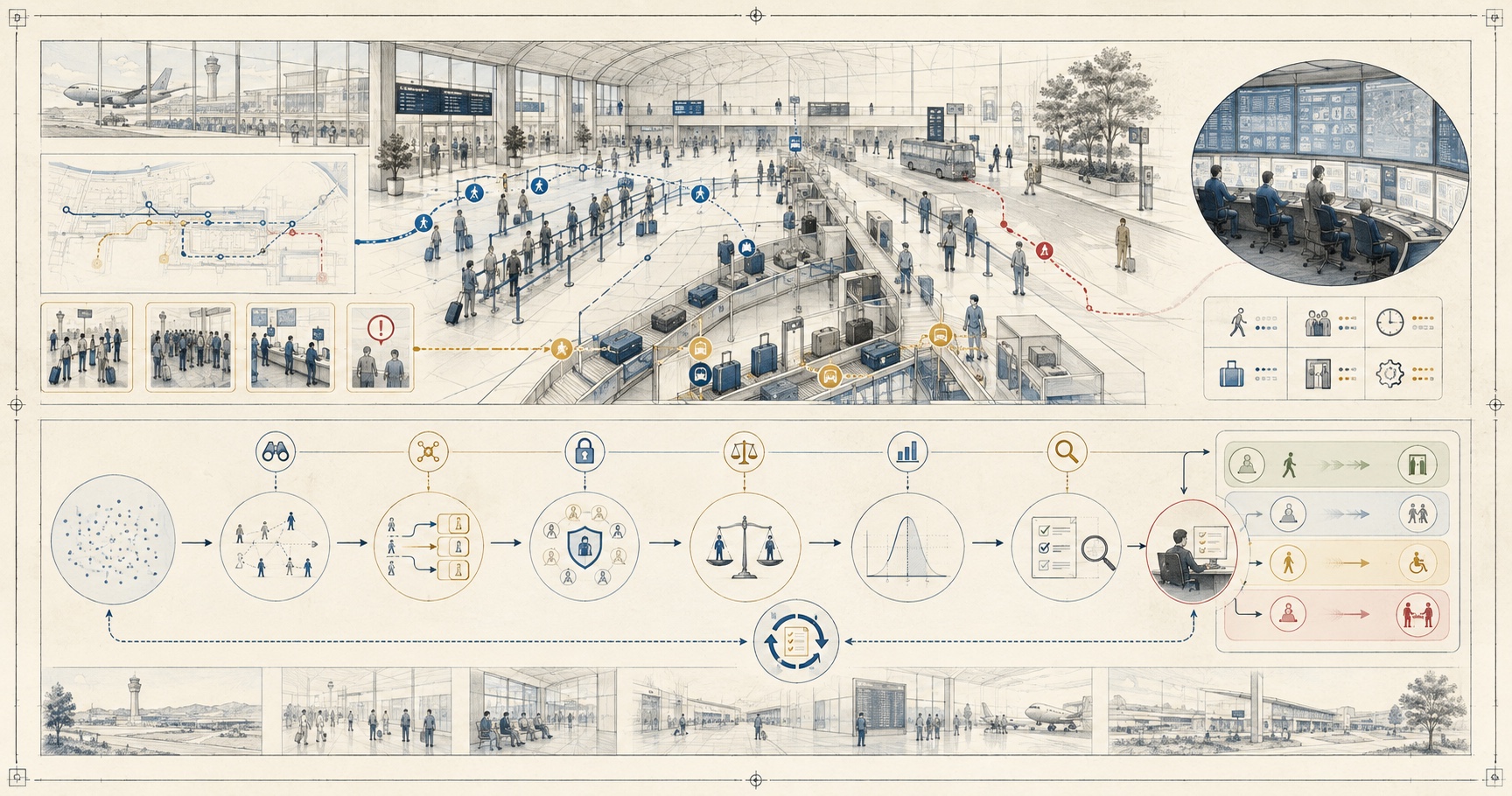
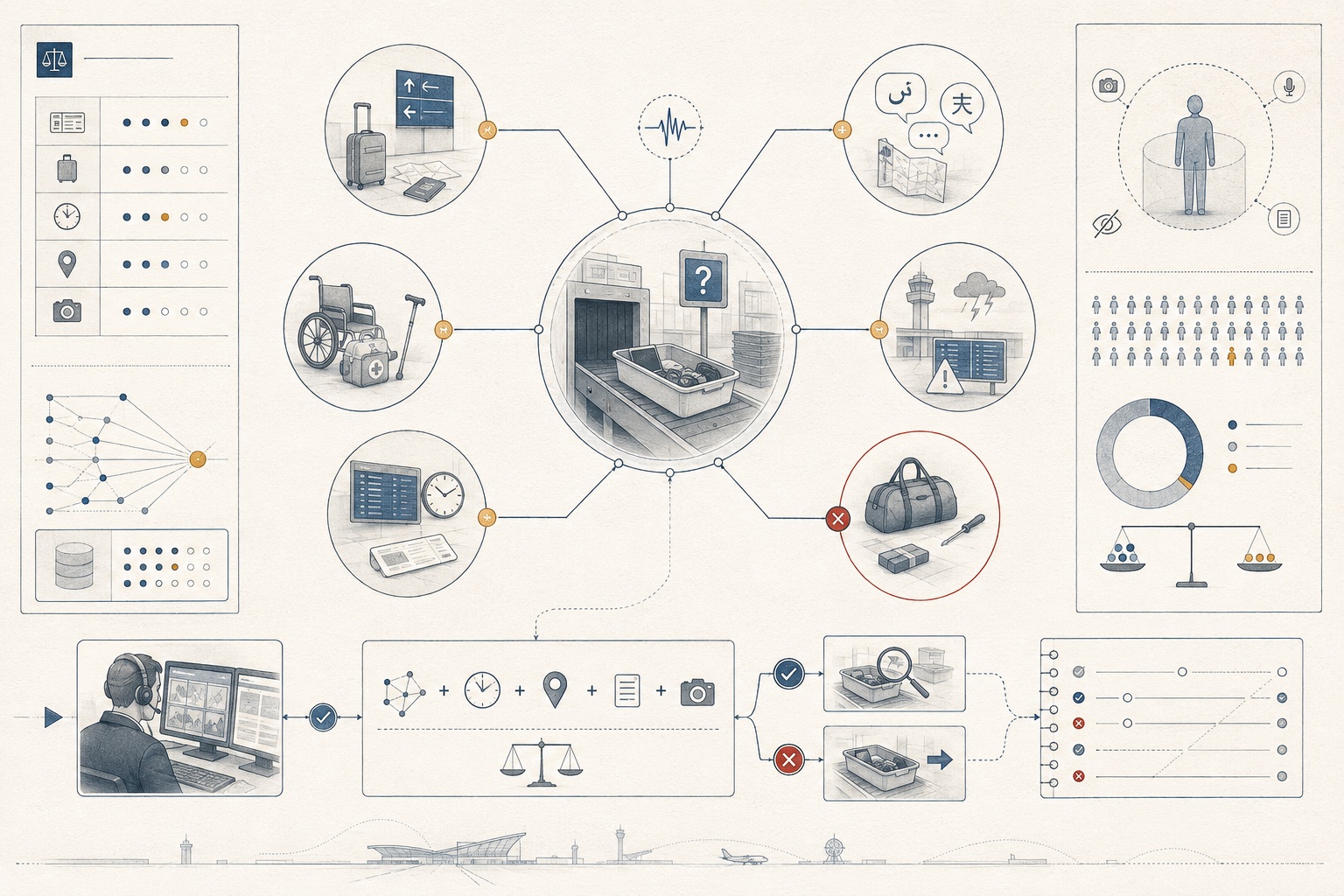
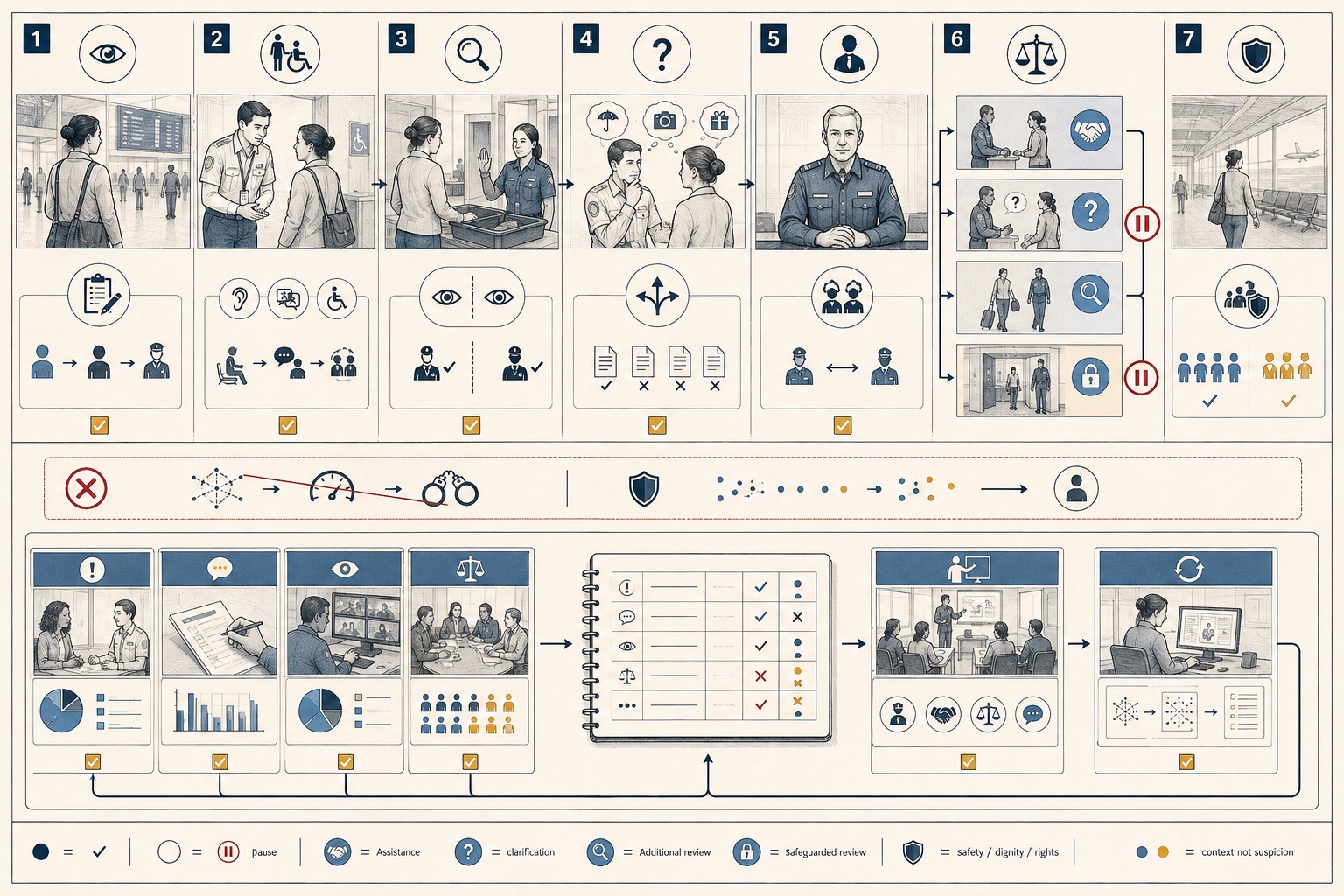
These original editorial plates are analytical aids, not source evidence or documentary reconstructions. They show what is being compared, where uncertainty sits and what observation would require the account to change.
The case in plain language
Start with the question,
not the answer.
Busy terminals produce confusion, stress, accessibility needs, language difficulty, missed connections and service disruption as well as genuine security concerns. A weak signal or behavioural impression can create false positives, unequal treatment and distraction unless context and independent evidence are required.
The method, step by step
Four moves.
One visible chain.
Symbiain keeps the moves separate: establish what is observed, relate the conditions, test the possible reading, and state what would require revision.
- 01 / Observe
What can we responsibly say?
ICAO treats security culture and human factors as parts of effective aviation security. Separately, US Government Accountability Office reviews found that evidence did not support the effectiveness of most revised behavioural indicators it examined in a TSA programme. The public record therefore supports caution rather than confidence in behaviour-only detection.
- 02 / Relate
What may connect?
Symbiain could structure a high-level decision-integrity layer around existing lawful procedures: record a neutral observation, retain plausible benign explanations, check accessibility and context, seek independent corroboration, show uncertainty and route any consequential decision to an authorised human supervisor. It should never assign a hidden suspicion score.
- 03 / Test
What would distinguish the readings?
Compared with the existing procedure, does a pre-specified evidence-and-alternatives step reduce unsupported escalation and unequal false positives without obscuring a verified security signal—and can outcomes be independently reviewed?
- 04 / Revise
What would change the account?
Change or stop the method when false positives, missed signals, complaints, bias or accessibility findings, privacy impacts, staff overrides or reviewed outcomes show that an assumption or escalation rule is unsound.
Why use Symbiain here?
From method
to practical value.
The insight is what becomes visible. The feature is what the method does. The benefit is what the user gains. The value is what can improve in the topic at hand.
- 01
Insight
The same visible behaviour can arise from many causes; context and corroboration are essential before security meaning is assigned.
- 02
Feature
Separates neutral observation, alternatives, accessibility, privacy, corroboration, human authority, proportionate response and correction.
- 03
Benefit
Helps staff explain why a concern was checked, what evidence supported the next step and how an incorrect inference will be retained and corrected.
- 04
Value
Provides a research framework for more humane, reviewable and evidence-disciplined escalation without publishing operational vulnerabilities.
What to examine
Five conditions
to hold together.
- 01Neutral, behaviourally specific operational observation without identity or emotion inference
- 02Ordinary travel, accessibility, medical, language and disruption explanations
- 03Independent procedural or evidential corroboration and source provenance
- 04Base-rate, false-positive, privacy, equality and proportionality controls
- 05Authorised human decision, observed outcome, complaint and retained correction
Tensions to hold
Vigilance ↔ false-positive harm
Rapid escalation ↔ contextual verification
Operational security ↔ privacy and equal treatment
Important boundary
Research-prototype case only. It is not aviation-security advice, threat detection, passenger screening, law-enforcement guidance, an operational procedure or a claim that behaviour reveals intent. It must not use demographic profiling, facial recognition, emotion inference, protected traits, automated suspicion scores or coercive action from a pattern alone. Any real work requires competent aviation-security leadership, lawful authority, privacy and equality controls, accessibility design, protected operational information and independent testing.
Sources & method
Sources support the stated observations only. All analytical readings remain provisional and should be tested against a defined purpose, scope and evidence base.