This research prototype asks whether Symbiain can sit above language and perception models as a non-linear, multimodal deliberative layer that keeps observations, context, competing interpretations, ethical constraints, permitted actions and correction visible to people who remain responsible.
Casebook / 21
Human interaction semantics for robotics.
Translate behaviour without erasing ambiguity.
How can a robot represent human interaction richly enough to respond appropriately without pretending to read minds, feel emotions or possess human consciousness?
This page demonstrates a way of structuring inquiry. It does not constitute professional advice, verified intelligence, a recommendation or a conclusion about any person, organisation or transaction.
Human-governed application boundary
Clarify the decision.
Do not profile the person.
Any proposed application begins with a named purpose, approved evidence, explicit exclusions and an accountable human decision owner. No ambient surveillance, covert behavioural scoring, mind-reading claim or autonomous consequential decision is proposed.
- 01Bounded purpose
One declared question and stop condition.
- 02Permissioned evidence
Known provenance, access and freshness.
- 03Visible uncertainty
Observation remains distinct from inferred intent.
- 04Human authority
People review, challenge, override and decide.
Visual field plates
Evidence before action.
Authority before automation.
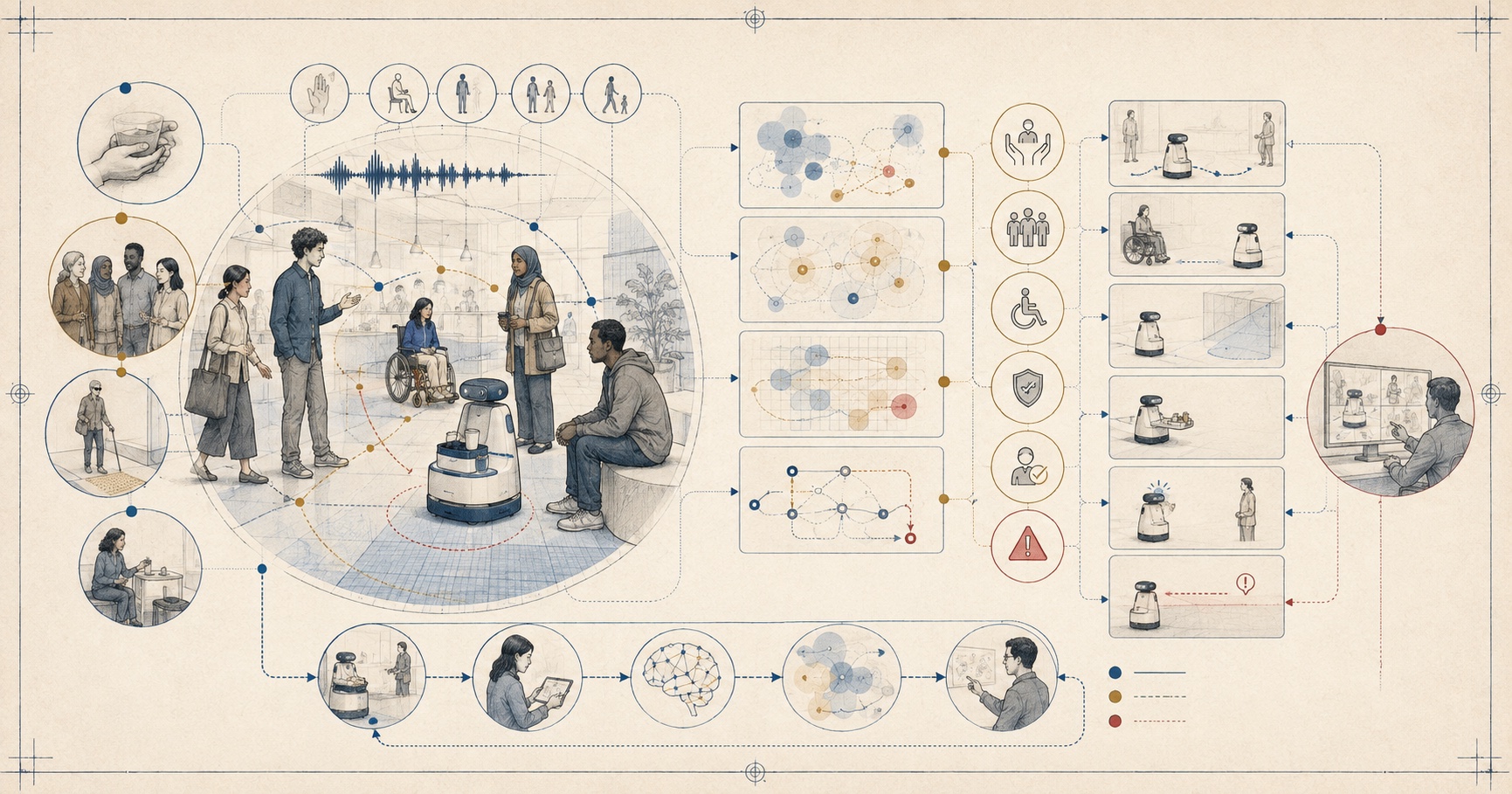
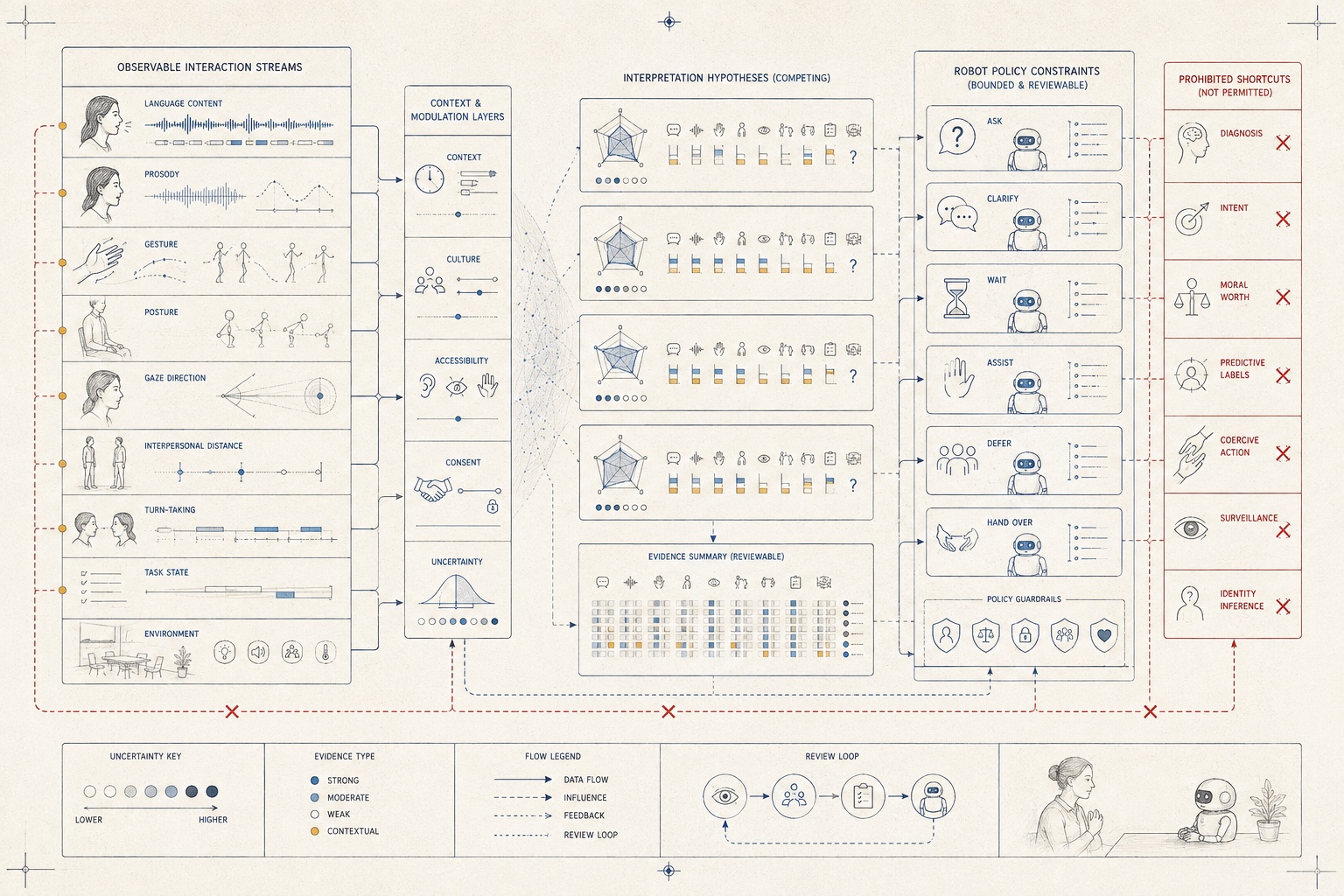
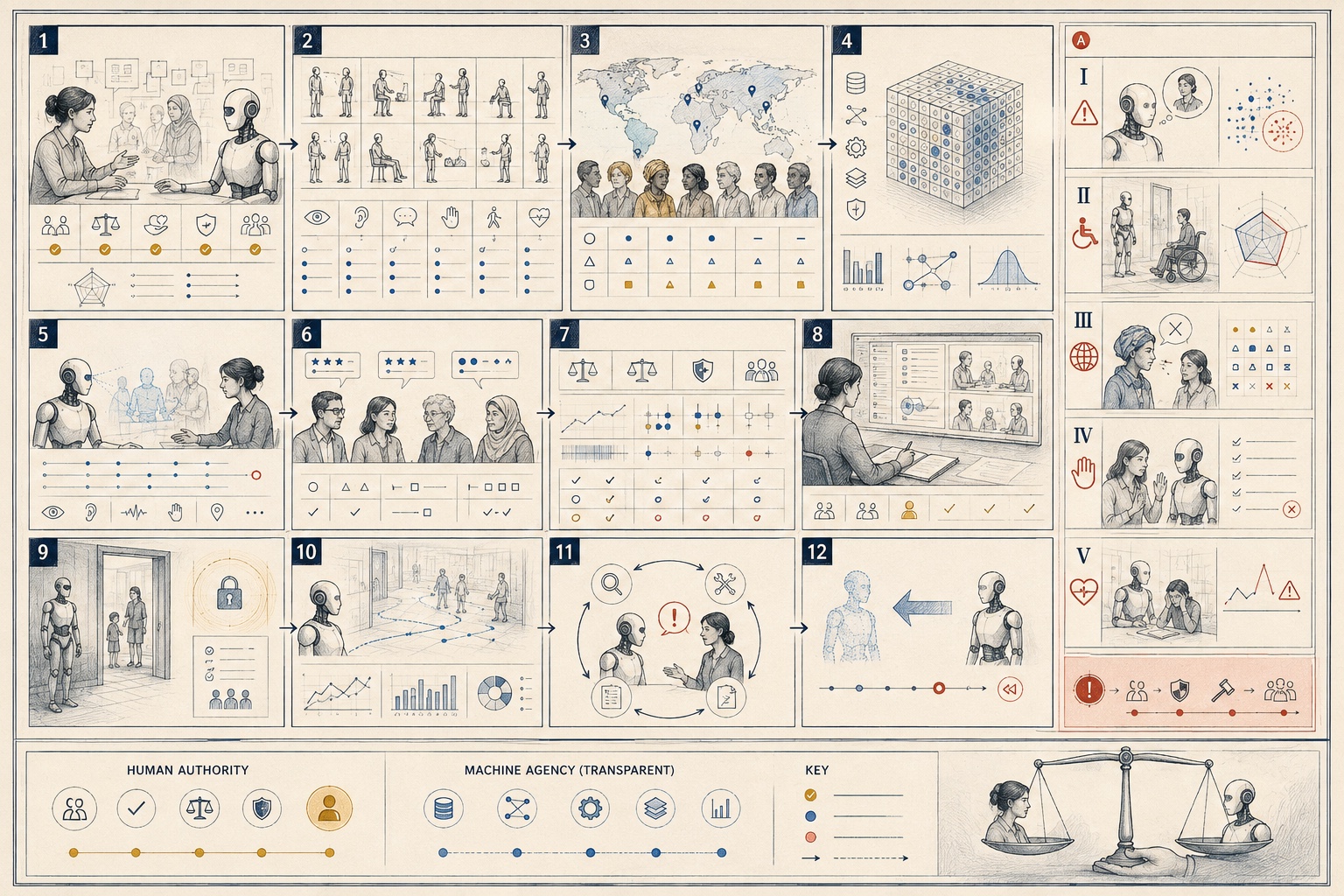
These Field Manual plates make the research proposition visible: what should remain distinct before a system proceeds, holds, explains, hands over or learns? They do not simulate judgement; they preserve context, surface uncertainty and return consequential decisions to accountable human authority.
The architectural proposition
Above the model.
Below human authority.
Symbiain is proposed here as a deliberative layer around language, perception and control models. It does not make the underlying model conscious. It makes the route from signal to interpretation, constraint, permitted action and correction more visible.
- 01 / Receive
More than alphabetic sequence.
Language can be considered alongside gesture, timing, distance, task state and environment—without collapsing them into one emotional label.
- 02 / Represent
Hold more than one reading.
The field retains several context-dependent explanations, their provenance and the uncertainty that separates observation from inferred meaning.
- 03 / Constrain
Values become operating limits.
Consent, dignity, fairness, privacy, accessibility and safety restrict what the system may infer and what a robot may do.
- 04 / Correct
People can revise the field.
Participants and accountable operators can clarify, override, withdraw consent, stop an action and retain the failure as evidence for change.
The case in plain language
Start with the question,
not the answer.
Spoken words, pauses, gesture, posture, distance, turn-taking and task conditions can be observed, but affect, intent, values and social meaning are context-dependent interpretations. Compressing them into one label removes ambiguity and can produce culturally narrow, inaccessible or unsafe behaviour.
The method, step by step
Four moves.
One visible chain.
Symbiain keeps the moves separate: establish what is observed, relate the conditions, test the possible reading, and state what would require revision.
- 01 / Observe
What can we responsibly say?
Human interaction is multimodal and situated. NIST’s AI Risk Management Framework notes that mathematical representations of complex human phenomena can remove necessary context, and recommends explicit human roles, multidisciplinary input, testing, evaluation and attention to impacts.
- 02 / Relate
What may connect?
Symbiain could provide a translation layer that represents several possible meanings at once, records provenance and uncertainty, applies consent, dignity, fairness, privacy and safety constraints, and limits the robot to reversible actions such as ask, clarify, wait, assist, defer or hand over. This is a proposition for synthetic deliberation—not evidence of subjective consciousness.
- 03 / Test
What would distinguish the readings?
Against a simpler baseline, does the layer improve context retention, appropriate clarification, cultural and accessibility robustness, safe deferral and human correction without increasing surveillance, false inference, manipulation or misplaced trust?
- 04 / Revise
What would change the account?
Advance, restrict or withdraw representations and policies according to participant feedback, false inferences, accessibility failures, cultural mismatches, consent withdrawal, unexpected harms, human overrides and independent evaluation.
Why use Symbiain here?
From method
to practical value.
The insight is what becomes visible. The feature is what the method does. The benefit is what the user gains. The value is what can improve in the topic at hand.
- 01
Insight
Human-like fluency is not human understanding; responsible interaction depends on preserving what remains ambiguous and who may correct it.
- 02
Feature
Maps observable interaction streams through context and competing interpretations into bounded, reversible robot actions under explicit ethical constraints.
- 03
Benefit
Helps designers and operators see which source supported an interaction state, what else it could mean and why the robot asked, waited or handed over.
- 04
Value
Defines a distinctive research architecture for contextual machine judgement while refusing unsupported claims of empathy, mind-reading or consciousness.
What to examine
Five conditions
to hold together.
- 01Observable language, prosody, gesture, posture, distance, turn-taking and task state
- 02Context, culture, accessibility, consent and environmental conditions
- 03Competing interpretations of affect, intent and social meaning with uncertainty retained
- 04Dignity, fairness, privacy, safety, transparency and permitted-action constraints
- 05Human correction, override, outcome review, rollback and retained failure
Tensions to hold
Rich representation ↔ privacy and minimisation
Contextual response ↔ false inference
Synthetic deliberation ↔ unsupported consciousness claim
Important boundary
Research-prototype case only. It does not establish emotion recognition, intent detection, psychological assessment, moral understanding, empathy, sentience, consciousness or safe autonomous social behaviour. It must not infer identity, diagnosis, moral worth or coercive action from behavioural patterns. Any real development requires participatory design, consent, data minimisation, accessibility and cultural testing, security, safety engineering, transparent machine-agency disclosure, human override and independent evaluation.
Sources & method
Sources support the stated observations only. All analytical readings remain provisional and should be tested against a defined purpose, scope and evidence base.