Corrosion is a useful case because a visible trace is real, while its mechanism, consequence and appropriate response still require evidence.
Casebook / 01
Corrosion.
A material condition is never only a surface condition.
Is the visible mark harmless, or is it evidence of an active process that needs attention?
This page demonstrates a way of structuring inquiry. It does not constitute professional advice, verified intelligence, a recommendation or a conclusion about any person, organisation or transaction.
Visual field plates
Make the field visible.
Keep the claim bounded.
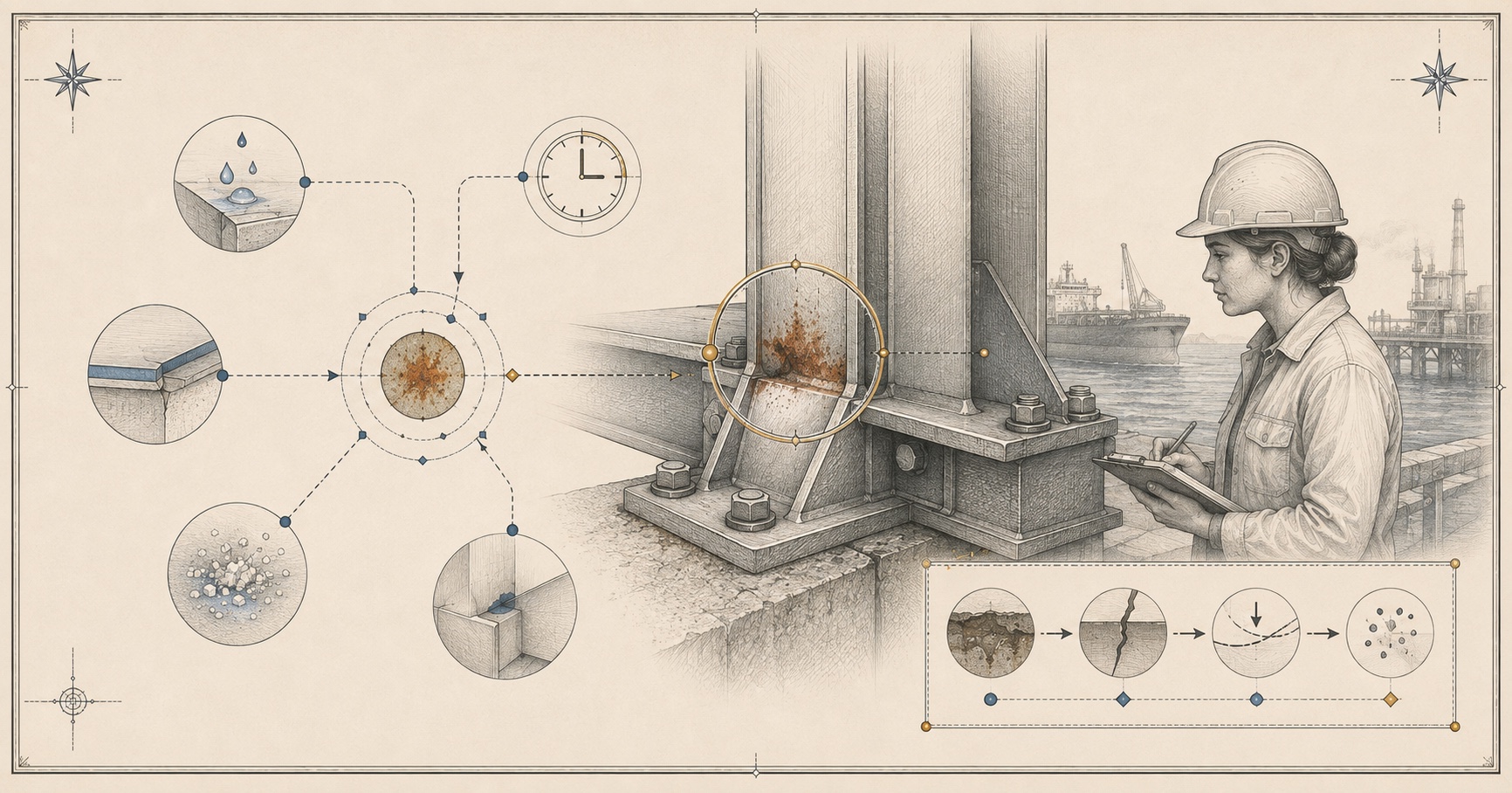
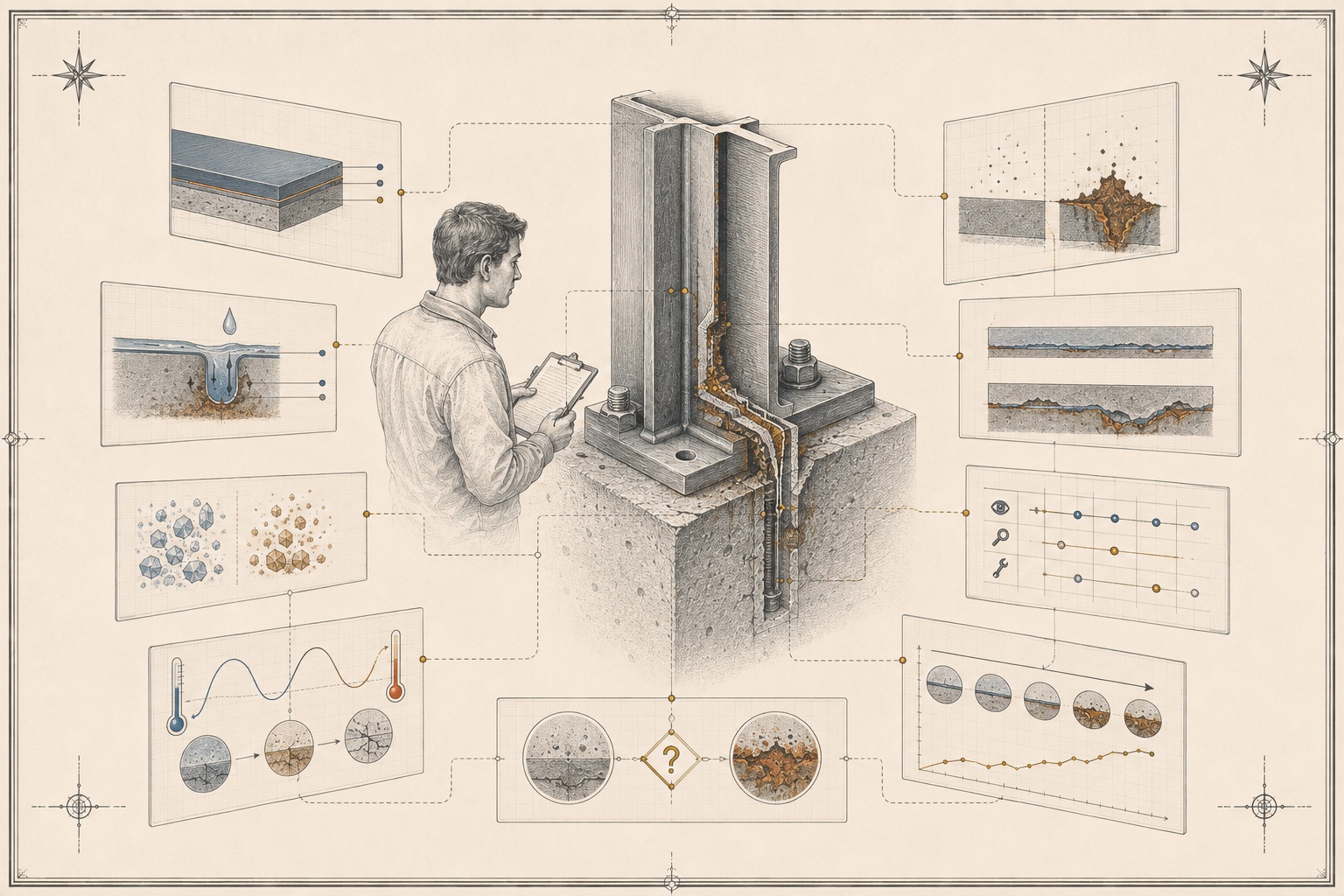
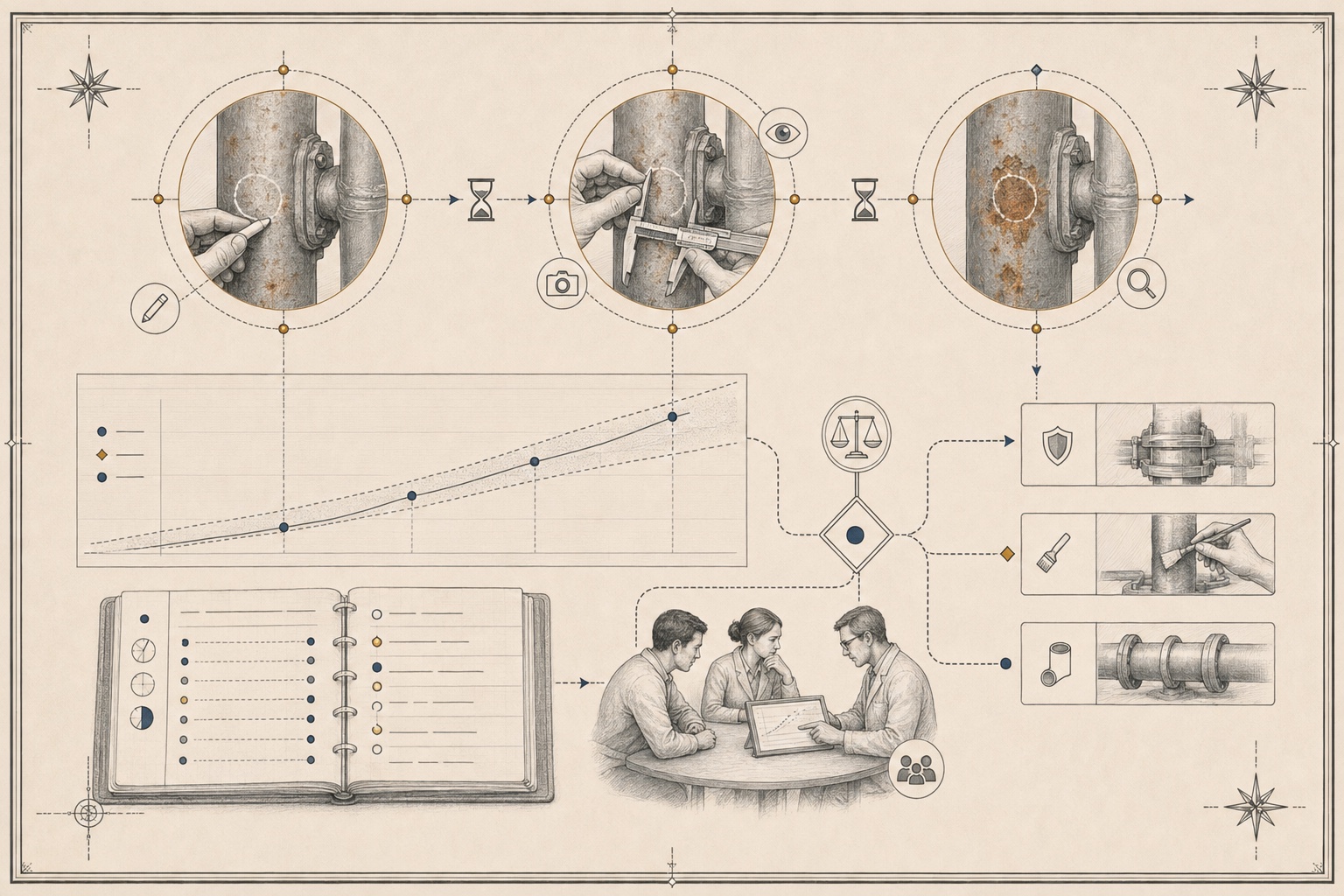
These original editorial plates are analytical aids, not source evidence or documentary reconstructions. They show what is being compared, where uncertainty sits and what observation would require the account to change.
The case in plain language
Start with the question,
not the answer.
Looking only at the mark can lead to underreaction or overreaction. The useful decision depends on material, environment, geometry, maintenance history and change over time.
The method, step by step
Four moves.
One visible chain.
Symbiain keeps the moves separate: establish what is observed, relate the conditions, test the possible reading, and state what would require revision.
- 01 / Observe
What can we responsibly say?
A visible surface change at a named location and point in time.
- 02 / Relate
What may connect?
A possible interaction of material, geometry, retained moisture, coating condition, exposure and maintenance history.
- 03 / Test
What would distinguish the readings?
What would distinguish a cosmetic trace from an active degradation process, and what observation would change that reading?
- 04 / Revise
What would change the account?
Revise the account when inspection, rate of change or consequence supports a different mechanism or level of concern.
Why use Symbiain here?
From method
to practical value.
The insight is what becomes visible. The feature is what the method does. The benefit is what the user gains. The value is what can improve in the topic at hand.
- 01
Insight
The visible defect is a trace. It is not yet the cause.
- 02
Feature
Maps material, exposure, geometry, maintenance and time as one connected system.
- 03
Benefit
Directs attention towards evidence that can distinguish appearance from active degradation.
- 04
Value
Supports earlier, more proportionate maintenance questions without pretending to replace engineering judgement.
What to examine
Five conditions
to hold together.
- 01Material and surface condition
- 02Moisture, salts and temperature
- 03Geometry and water retention
- 04Coating, access and inspection history
- 05Rate of change and consequences
Tensions to hold
Visible trace ↔ underlying mechanism
Access cost ↔ intervention timing
Local defect ↔ system condition
Important boundary
Illustrative systems-thinking case only. It is not an engineering assessment, inspection instruction, material recommendation or safety decision.
Sources & method
Sources support the stated observations only. All analytical readings remain provisional and should be tested against a defined purpose, scope and evidence base.