State the observed signal
Field guide / 05 of 07
Causality.
Make the field legible.
Causality asks how an outcome may have been produced. A pattern can prompt the question; it cannot answer it on its own.
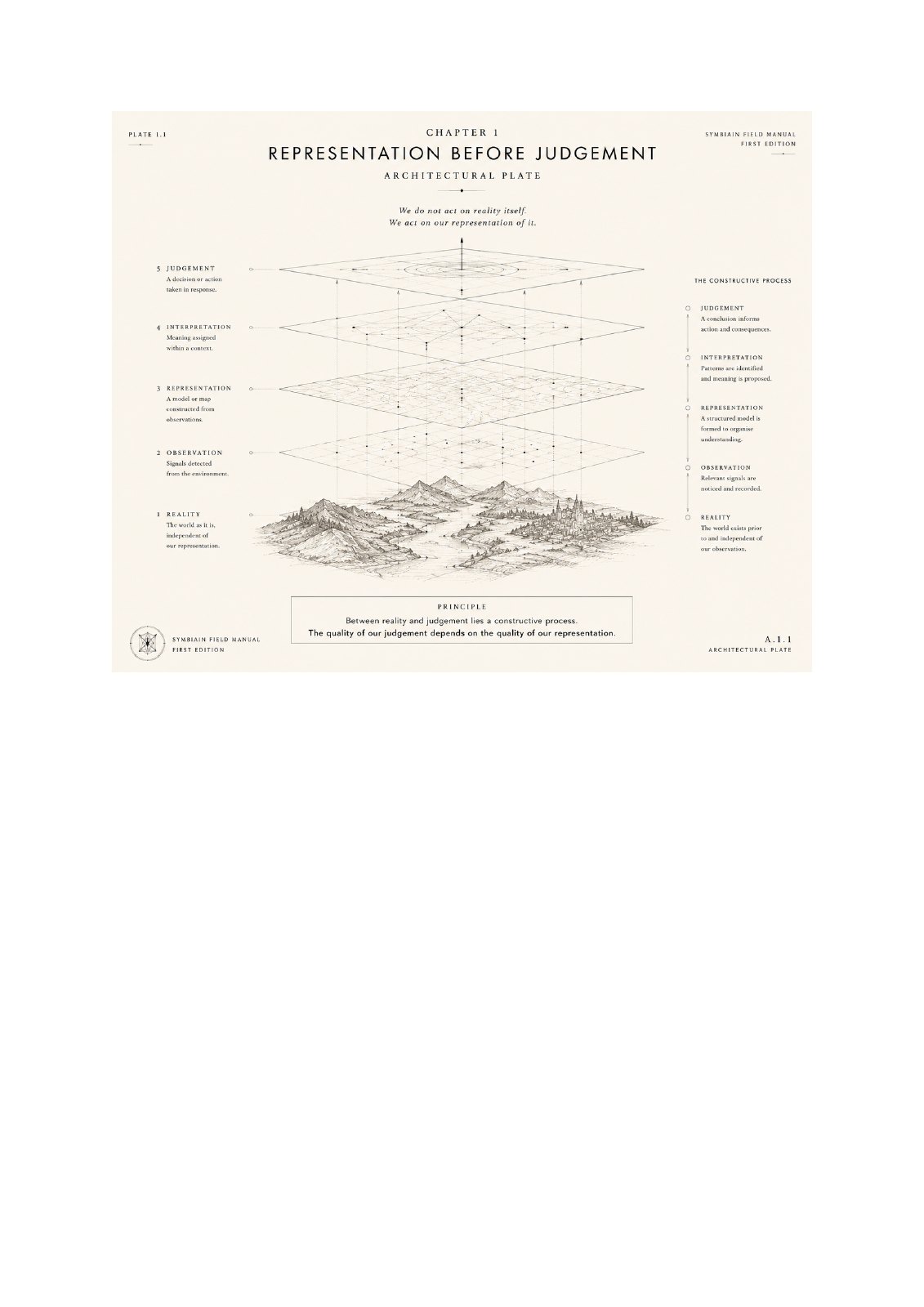
A pattern invites a mechanism question; it is not itself the answer.
The illustrated lesson
See the move.
Then make it.
Four web plates translate the Field Manual into a usable sequence: structure, application, record and practice. Read them in order, or return to the plate that your decision needs.
What mechanism could explain this?
Follow one bounded example through the method.
Running case / critical-component delivery
Three delays are established. Their cause is not.
- 01Signal
Arrival variance increased during the six-week reference period.
- 02Alternatives
Supplier capacity, carrier disruption, inspection backlog or poor master data could each produce delay.
- 03Discriminate
Release timestamps, route events and inspection queue time would separate these mechanisms.
- 04Calibrate
Confidence remains provisional until the relevant records are compared.
The next investigation is chosen for its power to distinguish explanations, not for its fit with the preferred story.
A useful method leaves a record that another person can question.
Produced record
Mechanism test
Competing explanations, their assumptions, discriminating evidence and current confidence.
Provisional
Revisable
Revisable
01Source
Where did the information come from?
02Status
Observed, reported, inferred or unknown?
03Boundary
To what time, place and scale does it apply?
04Revision
What evidence would alter the account?
Correlation is not a mechanism. An observed effect does not prove an intended chain.
A bounded 15 minutes field exercise.
01
Write the observed outcome without causal language.
02
Propose at least three plausible mechanisms.
03
State what each mechanism predicts you should find.
04
Choose the lowest-cost check that best separates them.
You are finished when the evidence could genuinely weaken your favoured explanation as well as support it.
The reading frame
What to look for
before you decide.
What mechanism could explain this?
- 01Signal — an observed mark
- 02Indicator — a selected proxy
- 03Construct — an organising interpretation
- 04Reality — what exceeds the representation
- 05Mechanism — a plausible producing process
In practice
Three useful
moves.
This reduces premature closure and directs effort toward evidence that can distinguish between explanations.
Offer competing mechanisms
Seek evidence that can discriminate between them
Calibration notes
Correlation is not a mechanism
An observed effect does not prove an intended chain